Aesthetic Surgery
Tummy tuck (abdominoplasty)
Pregnancy and major weight loss leave two lasting marks on the abdomen: slack excess skin and abdominal muscles separated in the midline. Neither returns with diet or exercise. A tummy tuck repairs the skin and the muscle wall together.
Written and medically reviewed by: Doç. Dr. Tahsin Oğuz Acartürk — Plastic, Reconstructive & Aesthetic Surgery; University of Pittsburgh. Last updated:
Who is it suitable for?
- Those whose abdominal skin has slackened and muscles separated after pregnancy
- Those with sagging abdominal skin after significant weight loss
- Those with lower abdominal sagging that does not respond to diet and exercise
- Those whose weight is stable and who can maintain it
Who is it not suitable for?
- Those planning significant weight loss — surgery should follow, not precede, the target weight
- Those planning pregnancy in the near future — pregnancy separates the repaired muscle wall again
- Those unable to stop smoking — the risk of impaired healing and tissue loss increases markedly
A tummy tuck is not a weight loss method. It removes regional fat and excess skin; it does not reduce overall weight. Framing expectations this way is the single strongest predictor of satisfaction.
Diastasis: separated abdominal muscles
During pregnancy the growing uterus pushes the two straight abdominal muscles apart from the midline. After birth these muscles often do not return to their original position and the connective tissue between them remains stretched. This is called rectus diastasis.
Diastasis does more than create a bulging abdomen; it also causes back pain, problems with intra-abdominal pressure and postural difficulty. Exercises such as sit-ups or planks do not close the gap and can widen it.
In a tummy tuck these muscles are brought back together in the midline with sutures. The waist narrows and the abdominal wall regains functional strength. This is the functional rather than aesthetic side of the operation.
If an umbilical hernia is present it can be repaired during the same operation. Screening for hernia at examination, with imaging where required, is standard practice.
Full and mini abdominoplasty
| Full abdominoplasty | Mini abdominoplasty | |
|---|---|---|
| Scope | Above and below the navel | Below the navel only |
| Navel | Reshaped | Left in place |
| Muscle repair | Along the full midline | Lower region only |
| Scar | Longer, along the bikini line | Shorter |
| Suitable candidate | Marked sagging and diastasis | Limited lower abdominal laxity |
Liposuction accompanies most tummy tuck plans; shaping the waist and flanks determines the coherence of the result. Where sagging affects the whole trunk, a body lift may be considered.
The recovery process
- STEP 1 — FIRST CONTACTInitial contact via WhatsApp or the form, based on your expectations, medical history and any photographs.
- STEP 2 — EXAMINATION AND PLANNINGAssessment of your anatomy and open discussion of applicable techniques, risks and realistic expectations.
- STEP 3 — PREPARATIONBlood tests, anaesthetic assessment, adjustment of smoking and blood-thinning medication.
- STEP 4 — SURGERY2–4 hours under general anaesthesia, with 1–2 nights in hospital and drains placed.
- STEP 5 — FIRST DAYSYou walk slightly bent forward in the first days; this is normal and resolves within a few days. Early walking matters because it reduces the risk of clots.
- STEP 6 — RETURN AND FOLLOW-UPA compression garment is worn for 6 weeks. Return to desk work in 2–3 weeks; heavy exercise is deferred for 6–8 weeks. The final shape settles at 6 months.
- Clot prevention: early mobilisation, compression stockings and anticoagulants where indicated
- No heavy lifting for the first 6 weeks
- Silicone tape and sun protection should be continued throughout the first year
Videos
Assoc. Prof. Acartürk Explains
Tap a cover to play the video right here. Videos are in Turkish.
 Liposuction ile karın germe (lipoabdominoplasti)
 Meme ve karın estetiği aynı seansta
Frequently asked questions
Where is the scar and how long is it?
The incision is placed along the bikini line at a level that underwear can conceal. Its length depends on how much skin is removed; with marked sagging it extends between the hip bones. The scar is permanent but fades over time.
Can I become pregnant after surgery?
Medically yes, but pregnancy separates the repaired muscle wall again and re-stretches the skin. If you are planning a pregnancy, it is better to postpone surgery.
What is the difference between a tummy tuck and liposuction?
Liposuction only removes fat and suits patients with good skin quality. If the skin has slackened or the muscles have separated, liposuction alone is insufficient and can even worsen sagging.
How will my navel look?
In a full abdominoplasty the navel stays in place, the surrounding skin is pulled down and the navel is brought out through the new skin. A fine scar forms around it and becomes indistinct over time.
When can I start exercising?
Walking begins in the first days. Light cardio can be added after week 4 and abdominal exercises after week 8, gradually and with medical approval.
Will I lose sensation?
Temporary numbness below the navel is expected and largely returns over months. A small area of permanent reduced sensation is possible.
Doç. Dr. Tahsin Oğuz Acartürk
Plastic, Reconstructive & Aesthetic Surgery · Oral & Maxillofacial Surgery · University of Pittsburgh
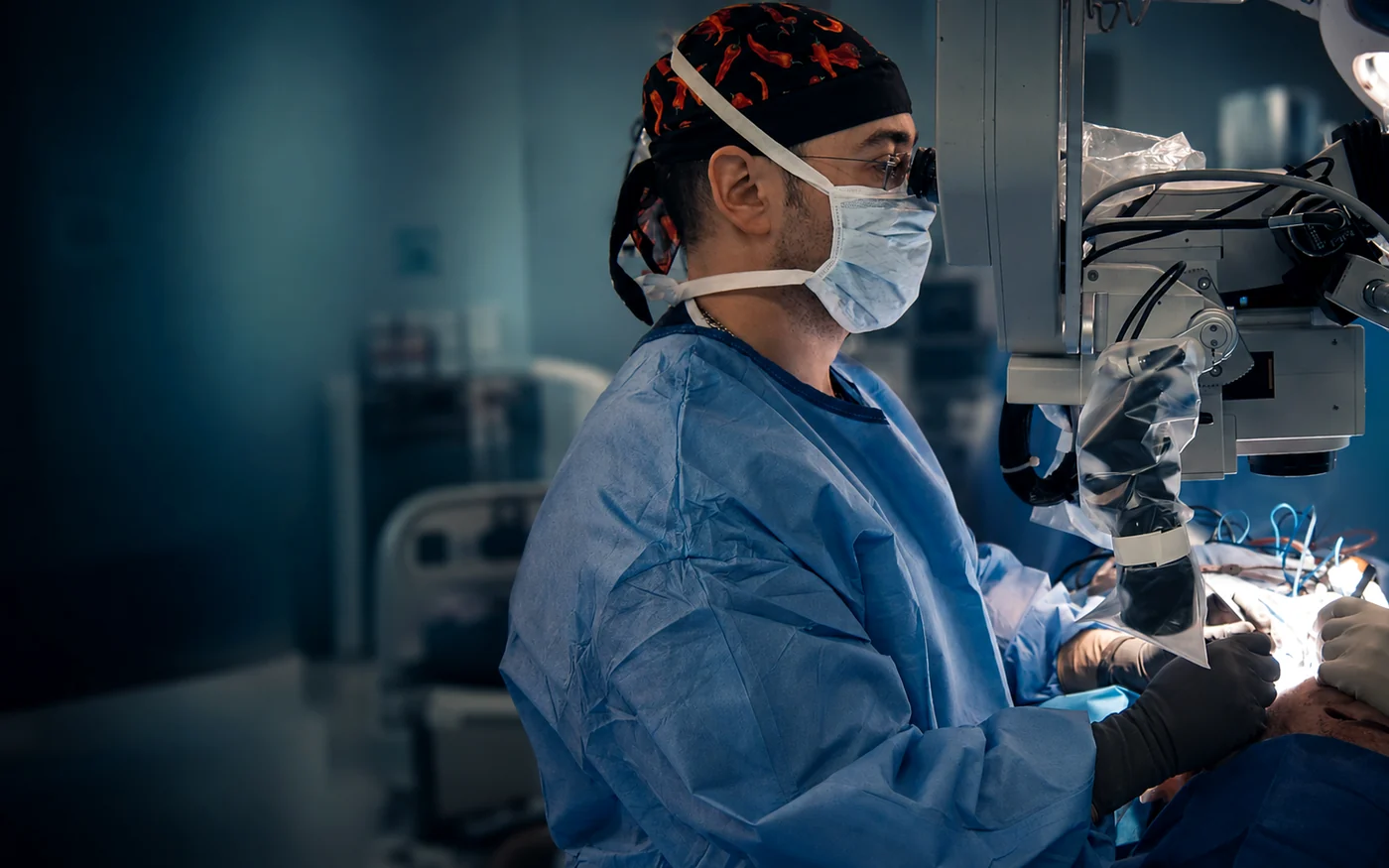
Experience in this field: A tummy tuck is as much a functional repair of the abdominal wall as an aesthetic procedure. Assoc. Prof. Dr. Acarturk's three years of general surgery training and his experience in abdominal wall reconstruction allow muscle repair and any accompanying hernia to be addressed safely in the same operation.
- Three years of general surgery training — abdominal wall and hernia surgery
- Experience in trunk and abdominal reconstruction
- Command of abdominal anatomy through DIEP flap surgery
Tummy tuck assessment
Share your pregnancy history, your weight change, how long your current weight has been stable, and photographs if you have them.