Aesthetic Surgery
Liposuction and body contouring
Liposuction is not a weight loss method; it removes regional fat deposits that resist diet and exercise and rebalances your proportions. In the right patient it produces a dramatic change in contour, in the wrong one disappointment. The difference begins with correct candidacy.
Written and medically reviewed by: Doç. Dr. Tahsin Oğuz Acartürk — Plastic, Reconstructive & Aesthetic Surgery; University of Pittsburgh. Last updated:
Who is the right candidate?
The most important factor in liposuction is not the amount of fat removed but the skin's capacity to retract. After fat is removed the skin must adapt to the new volume; in skin that has lost its elasticity, fat removal makes sagging visible.
- Those close to their ideal weight but with regional fat deposits
- Those whose skin elasticity is preserved
- Those with a lifestyle that will maintain their weight
- Those with realistic expectations
If the skin has slackened, liposuction alone is insufficient. It then needs to be planned together with a tummy tuck or an arm or thigh lift. Making this distinction in advance removes the most common cause of dissatisfaction.
Techniques used
- Tumescent liposuction: a special fluid is infiltrated first; bleeding and pain are reduced and fat separates more easily. This underlies all methods.
- VASER (ultrasound assisted): ultrasound energy selectively breaks down fat cells. It offers an advantage in fibrous areas and in defining muscle contours.
- PAL (power assisted): a vibrating cannula allows work in dense tissue with less trauma.
- WAL (water-jet assisted): a water jet separates fat gently and, because it spares lymphatic structures, is preferred in lipedema surgery.
Contouring with fat transfer
Harvested fat does not have to be discarded. It can be processed and transferred to areas where volume is desired, such as the buttocks, breast or face. This allows both slimming and volume enhancement in the same session. Details are on our fat grafting page.
There is a limit to how much fat can safely be removed in a single session. Exceeding it disturbs fluid and electrolyte balance and creates serious risk. Where large areas are involved, treatment is divided into sessions.
The recovery process
- STEP 1 — FIRST CONTACTInitial contact via WhatsApp or the form, based on your expectations, medical history and any photographs.
- STEP 2 — EXAMINATION AND PLANNINGAssessment of your anatomy and open discussion of applicable techniques, risks and realistic expectations.
- STEP 3 — PREPARATIONBlood tests, anaesthetic assessment, adjustment of smoking and blood-thinning medication.
- STEP 4 — SURGERY1–3 hours depending on the number of areas. Same-day discharge for limited areas; one night in hospital for larger ones.
- STEP 5 — FIRST DAYSA compression garment is worn from day one. Bruising and swelling peak on days 3–5; some leakage in the first days is normal.
- STEP 6 — RETURN AND FOLLOW-UPReturn to desk work in 3–7 days. Compression is worn for 4–6 weeks and exercise resumes gradually after 4 weeks. The final shape settles at 3–6 months.
- Manual lymphatic drainage speeds the resolution of swelling
- Firmness and irregularity in the early period are normal and soften over time
- Maintaining the result depends on weight stability
Videos
Assoc. Prof. Acartürk Explains
Tap a cover to play the video right here. Videos are in Turkish.
 Liposuction ile karın germe (lipoabdominoplasti)
Frequently asked questions
Does the fat come back?
The removed fat cells do not return. However, if you gain weight the remaining fat cells enlarge and fat distribution may change, which can spoil the result.
Does liposuction remove cellulite?
No. Cellulite arises from the connective tissue bands tethering the skin and is not corrected by fat removal. In some cases it can even appear more visible afterwards.
How much weight will I lose?
Liposuction is not a weight loss method. The change on the scale is usually a few kilograms; the real difference is in measurements and clothing size.
Will my skin be uneven?
Firmness and a wavy sensation are normal in the early period and soften over months. The risk of permanent irregularity depends on cannula size and technique; it can be corrected with fat grafting if needed.
Is general anaesthesia essential?
Sedation with local anaesthesia may be sufficient for limited areas. General anaesthesia is preferred for larger areas for safety.
How long must I wear the compression garment?
Usually 4–6 weeks, full-time for the first 2–3. Compression directly helps swelling resolve and the skin settle to the new contour.
Doç. Dr. Tahsin Oğuz Acartürk
Plastic, Reconstructive & Aesthetic Surgery · Oral & Maxillofacial Surgery · University of Pittsburgh
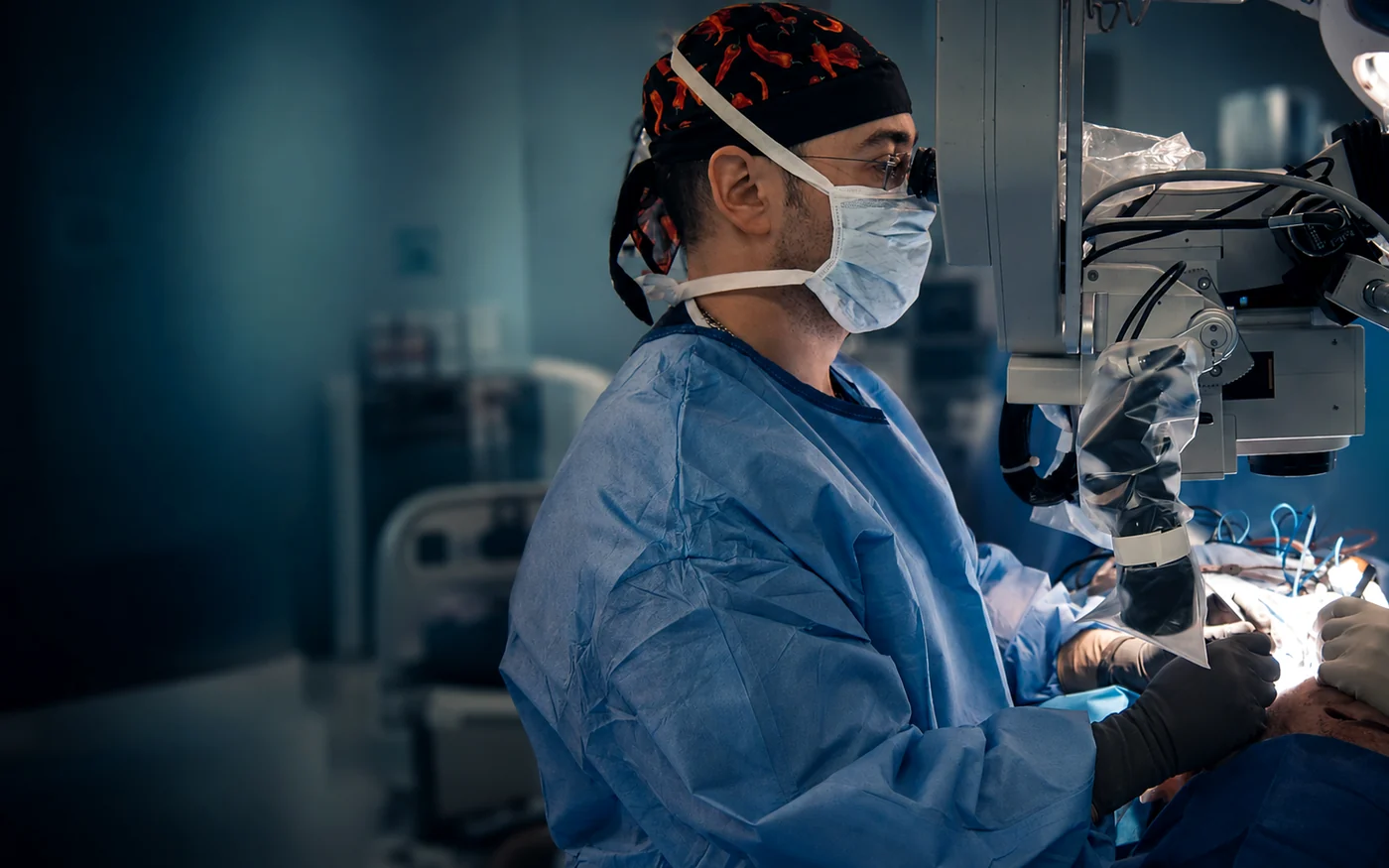
Experience in this field: Assoc. Prof. Dr. Acarturk is among the first Turkish plastic surgeons to have worked on adipose tissue and adipose-derived stem cell technologies at the University of Pittsburgh. This background allows him to treat liposuction not merely as fat removal but as a contouring tool in which the harvested tissue can be reused.
- Adipose tissue and stem cell research at the University of Pittsburgh
- Experience in lymphatic-sparing liposuction techniques
- Body contouring integrated with fat transfer
Liposuction assessment
Tell us which areas concern you, your height and weight, and how long your weight has been stable; add photographs if you have them.