Aesthetic Surgery
Eyelid surgery (blepharoplasty)
The eye area is the first part of the face to age. Drooping upper lids make the gaze look tired and, when advanced, narrow the field of vision; lower lid bags make even a well-rested person look exhausted. Blepharoplasty changes expression markedly through a small procedure.
Written and medically reviewed by: Doç. Dr. Tahsin Oğuz Acartürk — Plastic, Reconstructive & Aesthetic Surgery; University of Pittsburgh. Last updated:
Upper eyelid surgery
Over time the skin of the upper lid slackens and droops towards the lash line. This gives the gaze a tired and severe expression; when advanced it rests on the lashes, narrowing the visual field and causing constant contraction of the forehead muscles.
Excess skin is removed through the natural crease of the lid. Because the scar lies within this crease, it is largely concealed once healed. The fat pad at the inner corner is reduced where required.
Brow descent can be mistaken for eyelid laxity. If the real problem is a descended brow, eyelid surgery alone will leave the result insufficient and may even pull the brow lower. The distinction is made at examination.
Lower eyelid and under-eye bags
Fullness of the lower lid usually arises not from excess skin but from fat pads pushing forwards. Removing skin alone therefore does not correct it and can cause the lid to be pulled downwards.
- Transconjunctival approach: the incision is made inside the lid, leaving no external scar. Preferred in younger patients without excess skin.
- Fat repositioning: rather than removing the fat entirely, it is spread into the hollow beneath the eye, preventing a hollow, shadowed appearance.
- Skin incision approach: used through a fine incision beneath the lashes where there is marked excess skin.
Under-eye darkness does not always come from bags. Where it is caused by vessels showing through thin skin or by pigmentation, surgery will not correct it; this distinction must be made beforehand.
The recovery process
- STEP 1 — FIRST CONTACTInitial contact via WhatsApp or the form, based on your expectations, medical history and any photographs.
- STEP 2 — EXAMINATION AND PLANNINGAssessment of your anatomy and open discussion of applicable techniques, risks and realistic expectations.
- STEP 3 — PREPARATIONBlood tests, anaesthetic assessment, adjustment of smoking and blood-thinning medication.
- STEP 4 — SURGERYLocal anaesthesia with sedation is sufficient for most patients; the procedure takes 45–90 minutes and you go home the same day.
- STEP 5 — FIRST DAYSRegular cold compresses for the first 48 hours. Swelling and bruising peak on days 2–3; sleeping with the head elevated speeds recovery.
- STEP 6 — RETURN AND FOLLOW-UPSutures are removed on days 5–7. Most patients return to social life with make-up in 7–10 days; fine swelling may persist for a few weeks more.
- Avoid heavy lifting and bending forward in the first week
- Contact lenses are usually deferred for 2 weeks
- Dryness at screens is common; artificial tears are recommended
- Sunglasses and sun protection should be used in the first months
Frequently asked questions
Is eyelid surgery covered by insurance?
Where drooping of the upper lid narrows the visual field and this is documented by visual field testing, some policies provide cover. Conditions vary by policy.
How many years before it needs repeating?
The result of upper lid surgery is generally maintained for 10 years or more. Where lower lid fat has been repositioned the result is long lasting; further work may be needed years later as ageing continues.
Will my eyes look slanted?
In a correctly planned blepharoplasty the shape of the eye does not change. Removing too much skin or failing to support the lower lid can cause this appearance, which is why measurement matters more than the amount of tissue removed.
What is the difference from Botox?
Botox reduces lines caused by muscle movement; it does not correct drooping skin or fat bags. The two are not alternatives but solutions to different problems, and can be planned together.
I have dry eyes — can I still have surgery?
This must be declared beforehand. Dry eye can worsen temporarily after surgery; in that case planning is more conservative and made together with your ophthalmologist.
Doç. Dr. Tahsin Oğuz Acartürk
Plastic, Reconstructive & Aesthetic Surgery · Oral & Maxillofacial Surgery · University of Pittsburgh
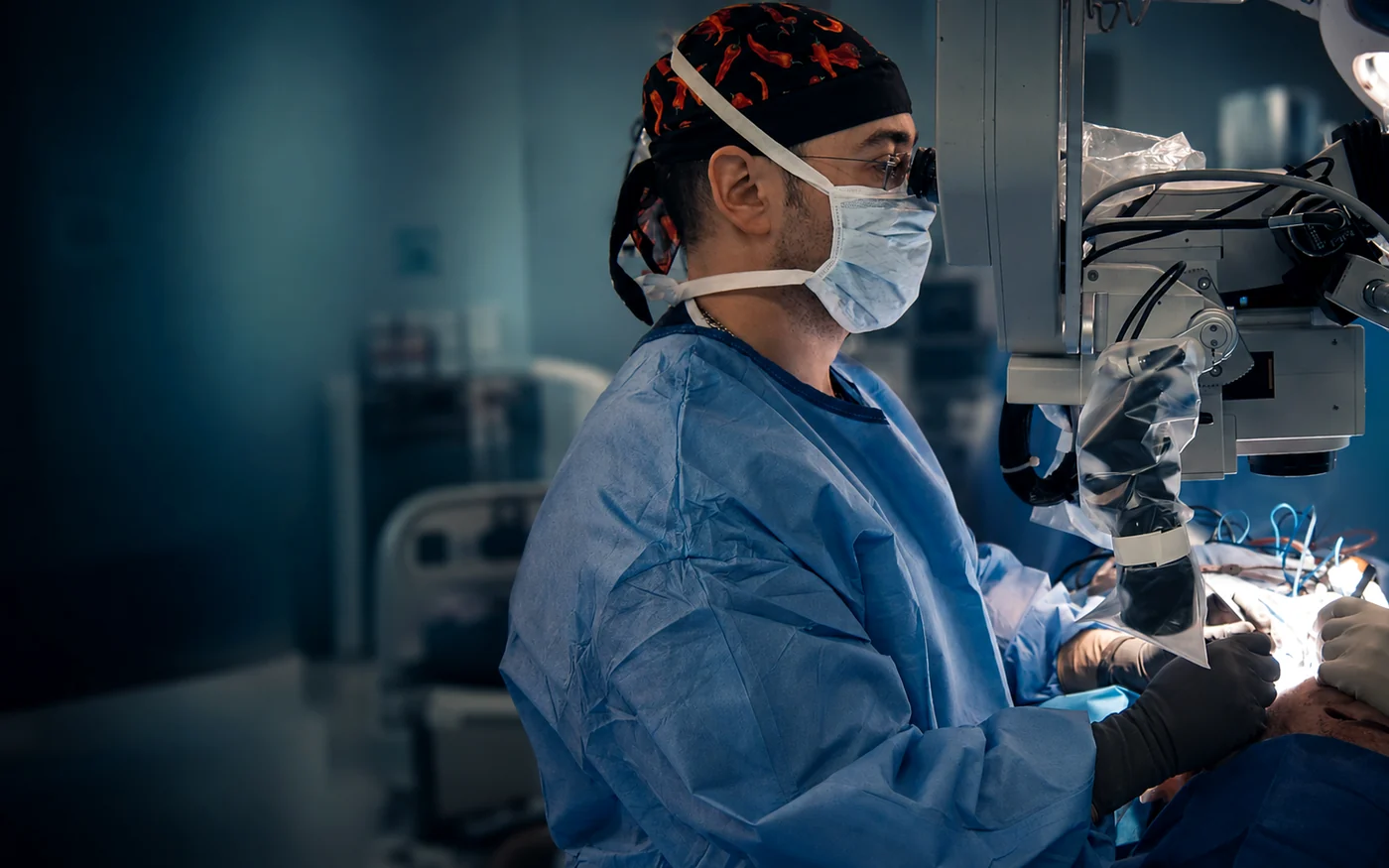
Experience in this field: The eye region is the part of facial anatomy that demands the finest detail. Drawing on his background in facial skeletal surgery and head and neck reconstruction, Assoc. Prof. Dr. Acarturk assesses the eyelid together with the surrounding structures, and also provides surgical solutions for eyelid problems caused by facial paralysis.
- Subspecialty in Oral & Maxillofacial Surgery
- Experience in eyelid reconstruction in facial paralysis
- Practice in facial skeletal and orbital surgery
Eyelid assessment
Tell us what bothers you about the appearance, whether you have any complaints about your vision, and send close-up photographs if you have them.