Aesthetic Surgery
Facelift and neck rejuvenation
Ageing is not simply sagging skin: the fat pads descend, volume is lost and the muscle layer slackens. Tightening skin alone produces a taut but still aged face. The right result comes from returning the tissues to where they belong.
Written and medically reviewed by: Doç. Dr. Tahsin Oğuz Acartürk — Plastic, Reconstructive & Aesthetic Surgery; University of Pittsburgh. Last updated:
The SMAS and deep plane approach
Beneath the skin of the face lies a layer of muscle and connective tissue called the SMAS. This is the structure that actually descends with ageing. In a modern facelift the skin is only a covering; the load is carried by the SMAS layer.
- SMAS plication: the layer is folded and suspended. Less invasive, suitable for moderate laxity.
- SMAS ectomy: a strip is excised from the layer to create tension.
- Deep plane: the SMAS and skin are raised and repositioned as a single unit. This gives a stronger, longer-lasting result in the midface and nasolabial region.
A "pulled" appearance is the result of over-tightening the skin. When the SMAS layer carries the load, skin tension stays low, expression remains natural and scar quality is markedly better.
Planning together with a neck lift
The face and neck cannot be considered separately. A slack neck beneath a rejuvenated face undermines the whole result. Three distinct problems may coexist in the neck:
- Fat accumulation beneath the chin — removed with liposuction
- Separation of the platysma muscle in the midline forming bands — repaired with sutures (platysmaplasty)
- Excess, slackened skin — suspended through the incision behind the ear
Which of these components you have is determined at examination, and the plan is built accordingly.
Complementary procedures
A facelift corrects sagging but does not restore lost volume. Most plans therefore include fat grafting: the temples, cheekbones and hollows beneath the eyes are filled with your own fat.
- Eyelid surgery — frequently combined to remove the tired look from the eyes
- Fat grafting — restoration of lost volume
- Brow lift — where forehead and brow descent is marked
- Skin resurfacing — for pigmentation and fine lines, after healing is complete
A facelift does not change skin quality. Pigmentation, fine lines and pore problems are not corrected by surgery; these require separate resurfacing treatments, usually planned after healing is complete.
The recovery process
- STEP 1 — FIRST CONTACTInitial contact via WhatsApp or the form, based on your expectations, medical history and any photographs.
- STEP 2 — EXAMINATION AND PLANNINGAssessment of your anatomy and open discussion of applicable techniques, risks and realistic expectations.
- STEP 3 — PREPARATIONBlood tests, anaesthetic assessment, adjustment of smoking and blood-thinning medication.
- STEP 4 — SURGERY4–6 hours under general anaesthesia, with one night in hospital.
- STEP 5 — FIRST DAYSFacial dressing and drains. Swelling and bruising peak on days 4–7; resting with the head elevated is necessary in the first week.
- STEP 6 — RETURN AND FOLLOW-UPSutures are removed on days 7–10. Most patients return to social life in 2–3 weeks. Swelling fully resolves and scars fade over 6–12 months.
- Smoking impairs wound healing and significantly increases the risk of skin loss — it should be stopped at least 4 weeks beforehand
- Heavy exercise and bending forward are restricted for the first 3 weeks
- Hair colouring is usually deferred for 4–6 weeks
Videos
Assoc. Prof. Acartürk Explains
Tap a cover to play the video right here. Videos are in Turkish.
 Yüz ve boyun germe
Frequently asked questions
How long does a facelift last?
Surgery turns the clock back but does not stop it. In a well-planned lift carried by the SMAS layer, the result is generally maintained for 8–12 years; ageing continues from that point.
Where are the scars?
Incisions are hidden within the hairline, in the natural crease in front of the ear and behind the ear. Correctly planned, they lie in the shadow of the hair and ear and are not noticeable at normal distance.
Do thread lifts replace a facelift?
No. Threads provide a limited, temporary effect that usually disappears within 1–2 years. They are not an alternative to surgical lifting where sagging is marked.
At what age should a facelift be done?
Tissue condition, not age, is decisive. Most patients are between 45 and 65, though it may be appropriate earlier for those who age early or have lost significant weight.
Will my expression change?
The aim is to preserve expression. When the load is placed on the SMAS layer rather than the skin, expression stays natural. Temporary weakness from nerve irritation is uncommon and usually resolves within weeks.
When can I attend a business meeting?
Bruising is usually coverable at around 2 weeks, and feeling comfortable takes about 3. If you have an important event, allow at least 4 weeks.
Doç. Dr. Tahsin Oğuz Acartürk
Plastic, Reconstructive & Aesthetic Surgery · Oral & Maxillofacial Surgery · University of Pittsburgh
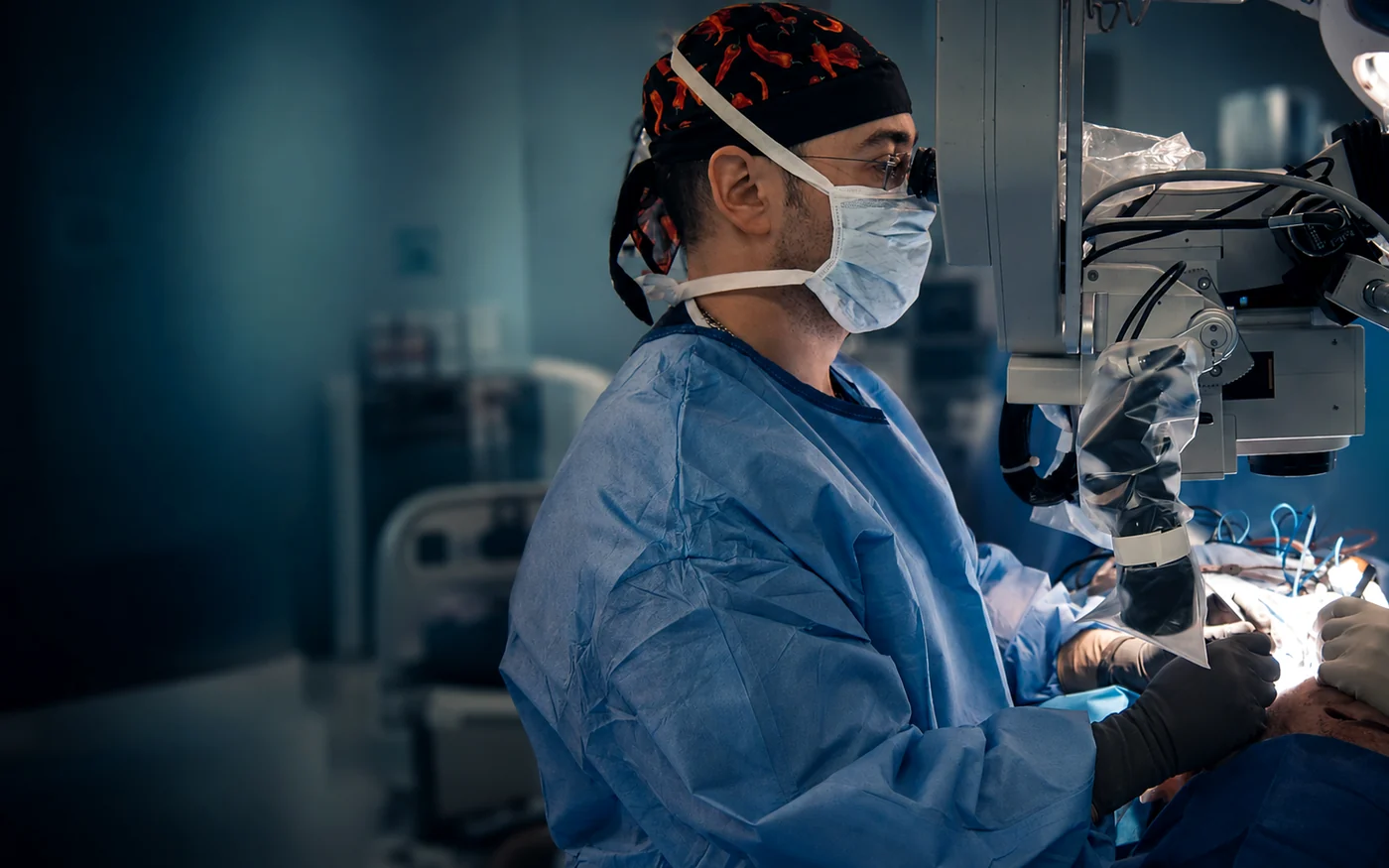
Experience in this field: What determines the result in a facelift is correct handling of the deep tissues, not the skin. Assoc. Prof. Dr. Acarturk's background in head and neck reconstruction and facial skeletal surgery gives him command of every layer of facial anatomy. His subspecialty in Oral & Maxillofacial Surgery is a qualification held by few plastic surgeons.
- Subspecialty in Oral & Maxillofacial Surgery
- Former Director of Head & Neck Reconstruction, University of Pittsburgh
- Experience in fat grafting and stem-cell assisted volume restoration
Facelift assessment
Tell us what bothers you most, any previous aesthetic procedures, and send front and side photographs if you have them.