Aesthetic Surgery
Fat grafting and stem-cell assisted volume restoration
Your own fat tissue is the body's most compatible filler: it contains no foreign material, causes no allergy, feels natural and is permanent to the extent that it takes. And it does more than add volume — the cells within it also improve skin quality.
Written and medically reviewed by: Doç. Dr. Tahsin Oğuz Acartürk — Plastic, Reconstructive & Aesthetic Surgery; University of Pittsburgh. Last updated:
What is fat grafting?
Lipofilling is the transfer of fat tissue from one part of the body to another after processing. For the transferred fat to survive it must develop a blood supply in its new site; it is therefore injected in fine layers rather than as a large mass.
Part of the injected fat is reabsorbed in the first months. The portion that takes is permanent and gains and loses weight with the body. The average take rate is 50–70%, which is why a degree of overcorrection is planned and a second session is performed where needed.
Areas of use
- Face: temples, cheekbones, hollows beneath the eyes, jawline and lip volume
- Breast: limited augmentation, softening of implant edges, contour correction after reconstruction
- Buttocks and body: volume and contour adjustment
- Scars and radiation damage: softening of hardened tissue
The stem-cell assisted approach
Fat tissue contains not only volume but regenerative cells. These cells support new vessel formation, improve skin quality and contribute to tissue healing. Enriching the fat for cell content aims to increase both the take rate and the effect on the tissue.
The University of Pittsburgh is an international centre in this field. Assoc. Prof. Dr. Acarturk is among the first Turkish plastic surgeons to have worked with adipose-derived stem cell technologies and uses this technique particularly in cancer, burn and post-radiotherapy reconstruction.
The concept of stem cells is frequently marketed in exaggerated terms in aesthetics. Cells derived from fat tissue contribute to tissue quality, but this is not a treatment that halts or reverses ageing. Framing expectations accordingly matters.
Procedure and recovery
- STEP 1 — PLANNINGThe target area, the volume required and the donor site are determined.
- STEP 2 — HARVESTINGFat is taken from the abdomen or thigh with fine cannulas at low pressure so as not to damage the cells.
- STEP 3 — PROCESSINGThe fat is separated from blood and fluid and purified.
- STEP 4 — INJECTIONIt is placed into the target area in numerous fine tunnels, layer by layer.
- STEP 5 — FIRST 3 MONTHSSwelling resolves and reabsorption completes. The permanent result is assessed at the end of this period.
- Pressure on the injected area should be avoided in the first week
- Smoking markedly reduces the survival rate of the fat cells
- Significant weight change affects the result
- A second session is planned after 3–6 months where needed
Frequently asked questions
How much of the injected fat is permanent?
On average 50–70% is permanent. The remainder is reabsorbed within the first 3 months. Extra volume is therefore planned and a second session performed if needed.
What is the advantage over dermal fillers?
Because it is your own tissue there is no risk of foreign-body reaction, it feels natural and the portion that takes is permanent. It also contributes to skin quality. The disadvantages are that it is a surgical procedure and the outcome is less predictable.
Will fat grafting make my face look puffy?
It looks fuller for the first 2–3 weeks because of swelling; this is temporary. As long as excessive volume is avoided and a layered technique is used, the result is natural.
Can fat be used instead of an implant for breast augmentation?
It can be used for a limited increase. However, the volume achievable in a single session is smaller than with an implant and more than one session may be needed. The decision follows your expectations.
Does fat grafting affect breast cancer screening?
Part of the grafted fat may lead to calcifications, which can be seen on imaging but can be distinguished from cancer by an experienced radiologist. Informing the radiology team is sufficient.
I am slim — do I have enough fat?
Sufficient volume can usually be harvested from the abdomen, inner thigh or inner knee. In very slim patients the target volume may be limited; this is assessed at examination.
Doç. Dr. Tahsin Oğuz Acartürk
Plastic, Reconstructive & Aesthetic Surgery · Oral & Maxillofacial Surgery · University of Pittsburgh
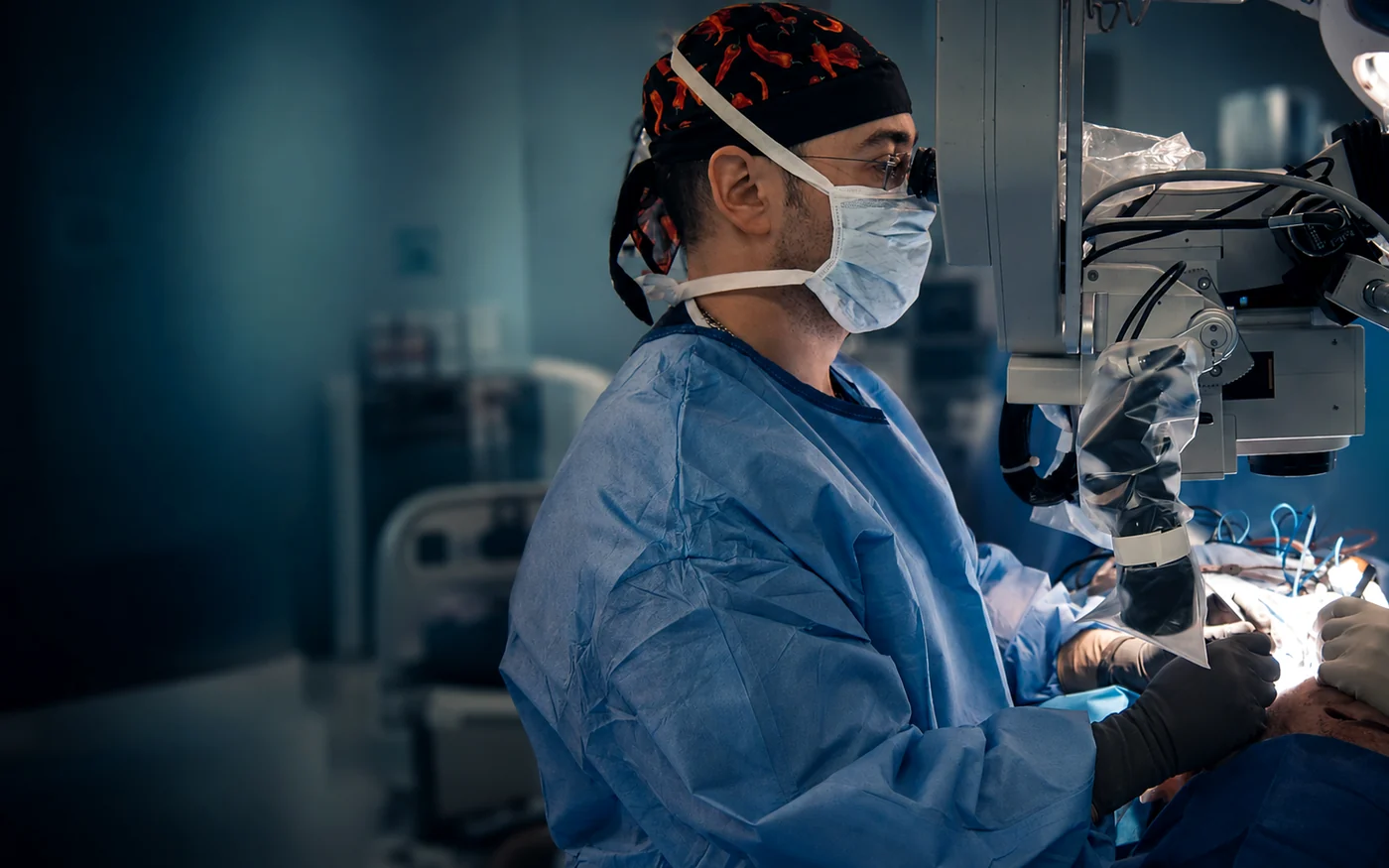
Experience in this field: Fat tissue and stem cell technologies are at the forefront of Assoc. Prof. Dr. Acarturk's academic work. The University of Pittsburgh is an international centre in this field; he is among the first Turkish plastic surgeons to have worked with these technologies and has also consulted for stem cell companies in the United States.
- Adipose-derived stem cell research at the University of Pittsburgh
- Postdoctoral work in tissue engineering and biomaterials at Carnegie Mellon
- Consultancy in stem cell technologies in the US
Fat grafting assessment
Tell us where you would like volume, whether you have had fillers before, and send photographs if you have them.