Aesthetic Surgery
Rhinoplasty (nose reshaping surgery)
A good rhinoplasty is a nose that does not look operated on. The aim is a result that harmonises with the rest of the face, ages naturally, and considers breathing at least as much as appearance.
Written and medically reviewed by: Doç. Dr. Tahsin Oğuz Acartürk — Plastic, Reconstructive & Aesthetic Surgery; University of Pittsburgh. Last updated:
Who is rhinoplasty suitable for?
Rhinoplasty is performed to improve the appearance of the nose, its breathing function, or both. The most common reasons for consultation are:
- A bony or cartilaginous prominence on the nasal dorsum (a hump)
- A drooping, wide or poorly defined nasal tip
- A nose that appears large or small relative to the face
- Deviation and asymmetry
- Difficulty breathing due to a deviated septum or enlarged turbinates
- A deformity or breathing problem left by a previous operation
Nasal growth is complete at around 16 years of age in girls and 17–18 in boys; surgery is planned once this growth is complete.
Rhinoplasty is facial surgery, not merely nasal surgery. Decisions taken without considering the chin, the slope of the forehead and overall facial proportions produce results that are technically successful but do not suit the face.
Open and closed technique
Open rhinoplasty
A small incision is made in the columella, the strip of skin between the nostrils, and the skin of the nose is lifted. The surgeon sees the entire framework directly, so asymmetries, graft placement and tip shaping are handled with greater control. The columellar scar becomes indistinct within a few months.
Closed rhinoplasty
All incisions remain inside the nose, leaving no external scar. Swelling is less and recovery faster. It is preferred in noses with a symmetrical framework requiring limited correction.
Preservation approach
These techniques aim to reposition the nasal dorsum while disturbing its natural structure as little as possible. In suitable anatomy they can produce a more natural dorsal line and less swelling.
The choice of technique should follow your anatomy, not the surgeon's habit. In revision cases, marked asymmetries and noses requiring cartilage support, the open technique is generally safer.
Breathing and the septum
Breathing is an inseparable part of nasal surgery. An operation that improves appearance while ignoring a breathing problem lowers the patient's quality of life.
- Deviated septum: deviation of the wall dividing the nose; corrected in the same session (septorhinoplasty)
- Turbinate enlargement: reduction of the structures inside the nose
- Nasal valve narrowing: inward collapse of the nostril, supported with cartilage grafts
Cartilage taken from the septum is also used as a graft to support the nasal tip. This makes it possible to address both function and shape in a single operation.
Health insurance coverage depends on whether the procedure has a functional component. It is worth clarifying this during the planning consultation.
The recovery process
- STEP 1 — FIRST CONTACTInitial contact via WhatsApp or the form, based on your expectations, medical history and any photographs.
- STEP 2 — EXAMINATION AND PLANNINGAssessment of your anatomy and open discussion of applicable techniques, risks and realistic expectations.
- STEP 3 — PREPARATIONBlood tests, anaesthetic assessment, adjustment of smoking and blood-thinning medication.
- STEP 4 — SURGERY2–4 hours under general anaesthesia, usually with one night in hospital.
- STEP 5 — FIRST DAYSA splint on the nasal dorsum and silicone packing if required. Ice and sleeping with the head elevated for the first 48 hours; bruising and swelling peak on days 3–5.
- STEP 6 — RETURN AND FOLLOW-UPThe splint is removed on day 7 and most patients return to social life within 7–10 days. Swelling at the tip resolves gradually over 12–18 months.
- Glasses should not rest on the nasal dorsum for the first 6 weeks
- Avoid heavy exercise and bending forward for the first 3 weeks
- Sun protection should not be neglected during the first year
Videos
Assoc. Prof. Acartürk Explains
Tap a cover to play the video right here. Videos are in Turkish.
 Profiloplasti: burun ve çene ucu estetiği
Frequently asked questions
Will my breathing improve after rhinoplasty?
If there is a deviated septum, turbinate enlargement or valve narrowing, these can be corrected in the same session and breathing usually improves markedly. This is assessed during examination.
When will I see the result?
The general shape is apparent once the splint is removed, but swelling at the tip resolves slowly. The final result takes 12–18 months, and longer in thick-skinned noses.
Does the open technique leave a scar?
The columellar scar fades within a few months and is not noticeable at normal conversational distance. Scar care during this period is important.
When can revision rhinoplasty be performed?
Because the tissues must soften and swelling must fully resolve, revision is generally planned at least 12 months after the first operation. Revision is technically more demanding than primary surgery.
Is the surgery very painful?
Rhinoplasty is less painful than most people expect. The main discomfort is the sensation of a blocked nose; modern silicone splints with airway channels markedly reduce this.
Will my nose change as I age?
Every nose ages. In a well-planned rhinoplasty the support structures are preserved, so the tip does not drop excessively over time; in noses from which too much tissue has been removed, collapse can occur with age.
Doç. Dr. Tahsin Oğuz Acartürk
Plastic, Reconstructive & Aesthetic Surgery · Oral & Maxillofacial Surgery · University of Pittsburgh
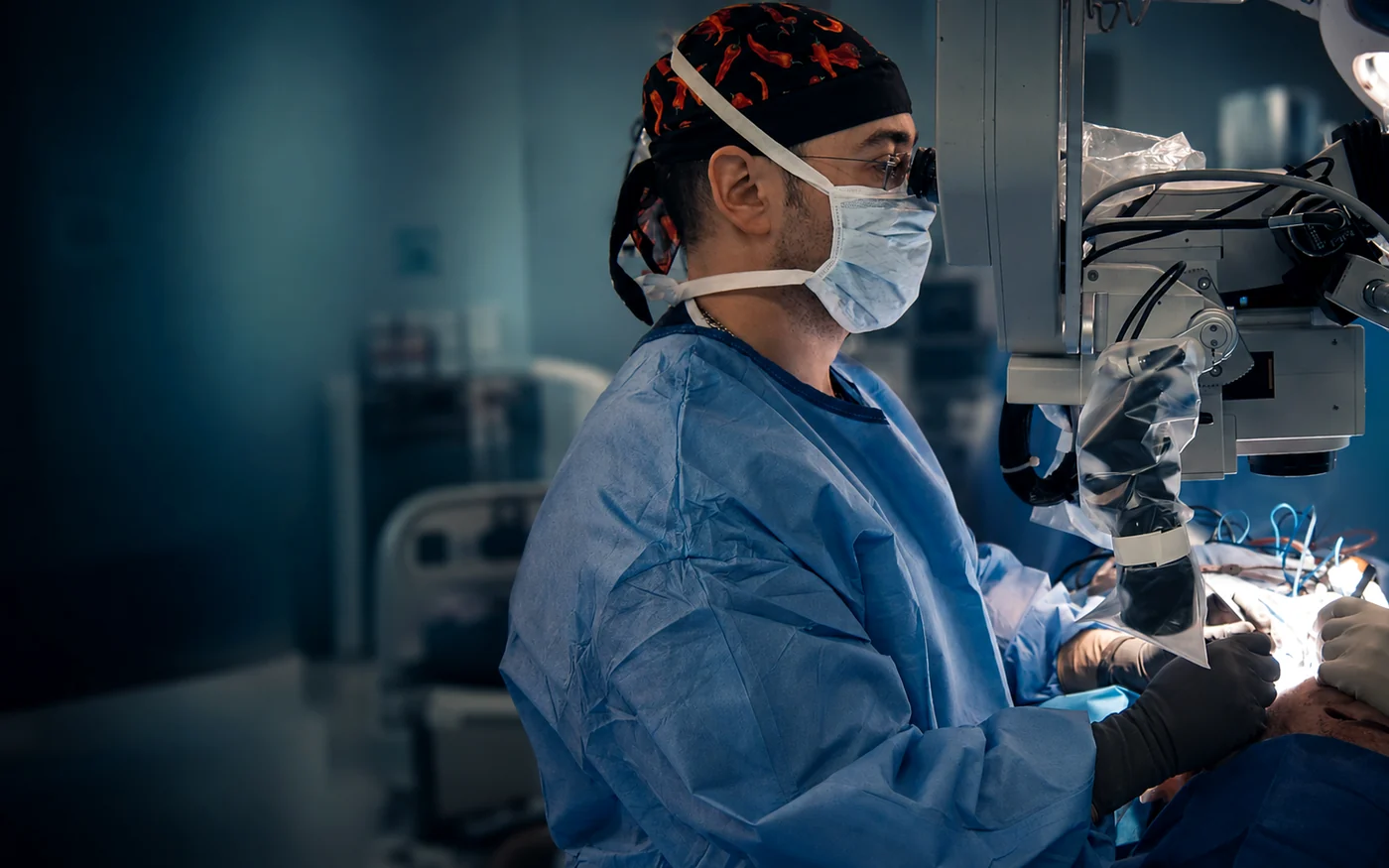
Experience in this field: Turkish surgeons have an internationally recognised body of experience in rhinoplasty. Assoc. Prof. Dr. Acarturk continued that experience at the University of Pittsburgh, where his colleagues came to refer nearly all of the rhinoplasty patients who approached them to him. His subspecialty in Oral & Maxillofacial Surgery allows him to assess the nose and the facial skeleton together.
- High-volume rhinoplasty practice at the University of Pittsburgh through peer referrals
- Subspecialty in Oral & Maxillofacial Surgery
- Experience in facial fractures and facial skeletal surgery
Rhinoplasty assessment
Tell us what you would like to change, whether you have any breathing complaints, and send front and side photographs if you have them.