Microsurgery Programme
Which specialist treats lipedema?
Most lipedema patients reach the right department years late. Along the way there are dietitians, endocrinologists and aesthetic clinics; the common thread is that the picture is mistaken for a weight problem. This page gives directions.
Written and medically reviewed by: Doç. Dr. Tahsin Oğuz Acartürk — Plastic, Reconstructive & Aesthetic Surgery; University of Pittsburgh. Last updated:
The short answer
Two specialties are involved in lipedema:
- Plastic and Reconstructive Surgery — conducts surgical treatment. Lymphatic-sparing liposuction (WAL, PAL) belongs to this field.
- Physical Medicine and Rehabilitation — conducts conservative treatment. Compression garment planning, manual lymphatic drainage and exercise programmes are arranged here.
These two specialties are not alternatives to one another. Conservative treatment continues after surgery; surgery comes into play at the point where conservative treatment is not enough.
Who should you see, and when?
| Your situation | Department to consult |
|---|---|
| No diagnosis, painful swelling in the legs | Plastic surgery or physical medicine — a doctor who works with lipedema |
| Diagnosed, pain affecting daily life | Plastic and reconstructive surgery — assessment for surgical candidacy |
| Receiving conservative treatment, not sufficient | Plastic and reconstructive surgery |
| Compression garment and physiotherapy plan needed | Physical Medicine and Rehabilitation |
| Suspected lymphatic involvement (swelling of the feet too) | A plastic surgeon who performs lymphedema surgery |
| Suspected hormonal disorder | Endocrinology — for accompanying conditions |
Endocrinologists and nutrition specialists play a supporting role in lipedema but do not treat the disease itself. Referring a picture that does not resolve with dieting to a dietitian alone is the commonest reason for diagnostic delay.
What to look for when choosing a surgeon
This is the most critical issue in lipedema: not every liposuction is lipedema surgery. Aesthetic liposuction focuses on reducing volume; in lipedema surgery the priority is preserving the lymphatic system. A procedure performed with the wrong technique can damage the lymphatic structure and worsen the picture.
Reasonable questions to ask
- Which technique do you use in lipedema surgery? (WAL, PAL)
- What approach do you take to preserving lymphatic structures?
- How many sessions will be needed, and why?
- What is the plan for compression garments and physiotherapy after surgery?
- Do you also perform lymphedema surgery?
- What is the realistic expectation — will the disease resolve, or will the symptoms lessen?
The phrase "lipedema resolves completely" is a warning sign. Surgery reduces the diseased fat tissue; it does not eliminate the disease. An honest assessment speaks in terms of measurable goals: less pain, more movement, reduced volume.
How should you prepare for your appointment?
- Symptom history: when it began, in which period (puberty, pregnancy, menopause)
- Description of pain: how often, how severe, what makes it worse
- Weight history: the diets you have tried and how your legs responded
- Family history: a similar shape in your mother, sister or aunt
- Previous treatments: compression garments, lymphatic drainage, any previous liposuction
- Photographs: from the front, side and back; ideally showing change over time
- Your height and weight
Being able to describe the presence and severity of pain clearly is very important. This is the core finding distinguishing lipedema from simple fat accumulation, and the diagnosis rests largely on it.
Videos
Assoc. Prof. Acartürk Explains
Tap a cover to play the video right here. Videos are in Turkish.
 Lipödem mi, lenfödem mi? Doğru teşhis
Frequently asked questions
Which specialist treats lipedema?
Plastic and Reconstructive Surgery for surgical treatment, Physical Medicine and Rehabilitation for conservative treatment. The two complement one another.
Do I need to see a dietitian?
Nutritional support is helpful — weight control eases lipedema symptoms. But lipedema does not resolve with dieting. Being referred to a dietitian alone is the commonest reason for diagnostic delay.
Does every plastic surgeon perform lipedema surgery?
No. Lipedema surgery requires command of lymphatic-sparing techniques (WAL, PAL). It is not the same procedure as aesthetic liposuction; it is reasonable to ask about the surgeon's experience in this field.
Should I see an endocrinologist?
If a hormonal disorder is suspected, yes. However, lipedema itself is not a hormonal disease; endocrinology assesses accompanying conditions.
Is it performed in state hospitals?
Lipedema surgery is performed at some university and training-and-research hospitals. The number of centres is limited; confirming before applying will save time.
At which stage should I seek surgery?
If pain is affecting your daily life, if movement is beginning to be restricted, or if the condition is progressing despite conservative treatment, the time for assessment has come. There is no need to wait for an advanced stage.
Doç. Dr. Tahsin Oğuz Acartürk
Plastic, Reconstructive & Aesthetic Surgery · Oral & Maxillofacial Surgery · University of Pittsburgh
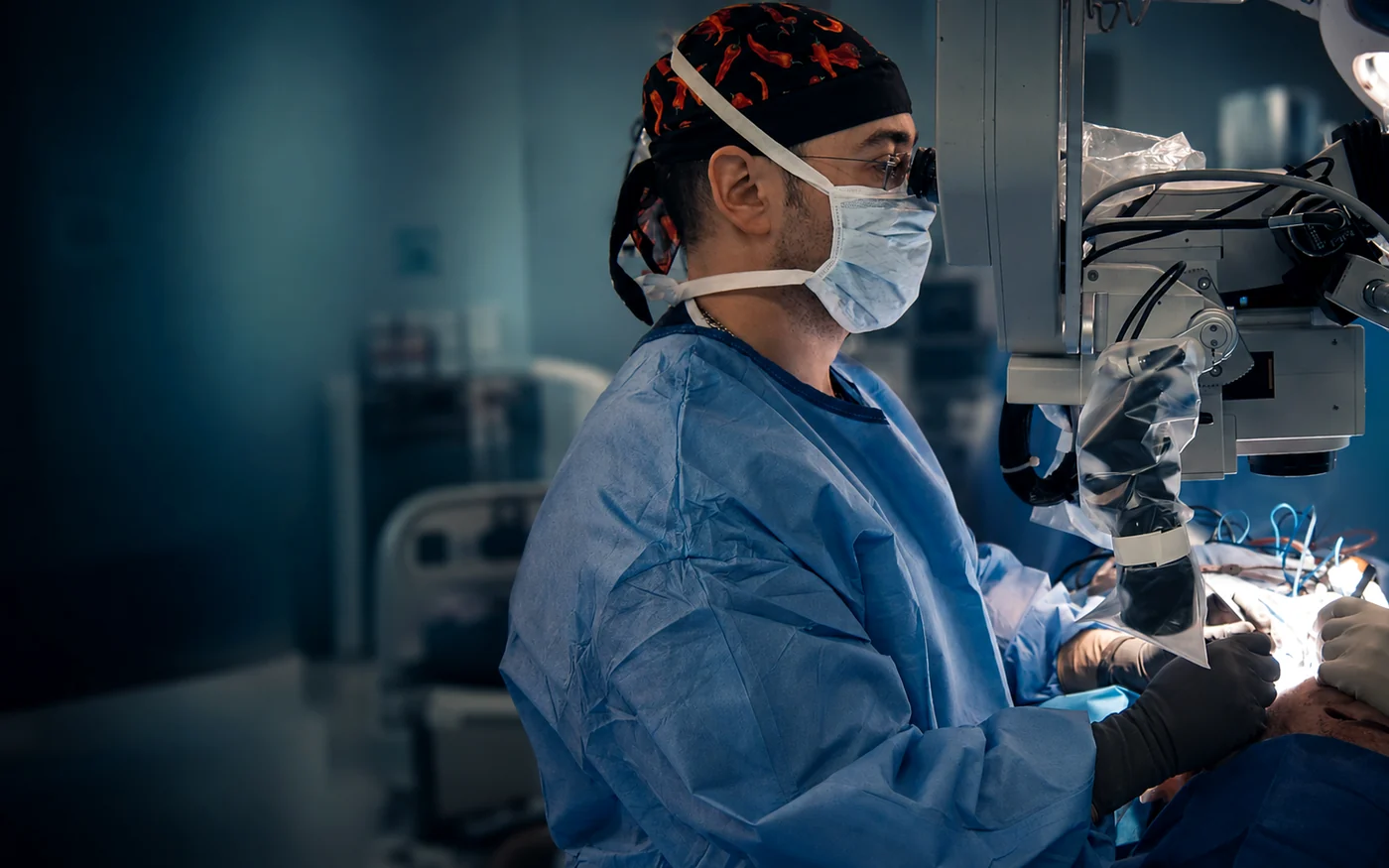
Experience in this field: Lipedema surgery and aesthetic liposuction are different undertakings. In lipedema the priority is preserving the lymphatic system, which requires a surgeon who works with lymphatic anatomy. Assoc. Prof. Dr. Acarturk performs both lipedema surgery and lymphedema microsurgery and has worked on adipose tissue technologies at the University of Pittsburgh.
- Participation in the European lymphatic microsurgery group
- Adipose tissue and stem cell research at the University of Pittsburgh
- Experience in lymphatic-sparing liposuction
The first step towards the right assessment
Tell us how long your symptoms have lasted, how severe the pain is and which treatments you have tried; attach photographs if possible.