Microsurgery Programme
Which specialist treats lymphedema?
Lymphedema is not the disease of a single specialty. Patients therefore often move between departments and reach the right address months later. This page explains plainly which specialist you should see, and when.
Written and medically reviewed by: Doç. Dr. Tahsin Oğuz Acartürk — Plastic, Reconstructive & Aesthetic Surgery; University of Pittsburgh. Last updated:
The short answer
Two main specialties are involved in lymphedema, and both are necessary:
- Plastic and Reconstructive Surgery — conducts surgical treatment. Lymphatic microsurgery (LVA), vascularised lymph node transfer and reduction surgery belong to this field.
- Physical Medicine and Rehabilitation — conducts conservative treatment. Complex decongestive physiotherapy, manual lymphatic drainage, bandaging and compression garment planning are carried out here.
These two specialties are not alternatives to one another but complementary. Physiotherapy continues after surgery; surgery comes into play for the patient whose condition cannot be controlled by physiotherapy. The best results are obtained in centres where the two work together.
Who should you see, and when?
| Your situation | Department to consult |
|---|---|
| New swelling, no diagnosis made | First a doctor who will investigate the cause: your family doctor or the relevant specialist |
| Arm/leg swelling after cancer treatment | Plastic surgery + physical medicine (together) |
| Diagnosed, receiving physiotherapy but not sufficient | Plastic and reconstructive surgery — assessment for surgical candidacy |
| Early stage, wishing to learn surgical options | Plastic and reconstructive surgery (lymphatic microsurgery) |
| Recurrent cellulitis attacks | Infectious diseases + the lymphedema team |
| Sudden painful one-sided swelling | Emergency department — vascular obstruction must be excluded |
Sudden, painful, one-sided swelling raises the possibility of deep vein thrombosis and is an emergency. Lymphedema assessment follows once that possibility has been excluded.
The role of other specialties
- Oncology: follow-up and referral of the patient still undergoing cancer treatment
- General surgery / gynaecology / urology: monitoring and early referral of the patient who has had lymph node dissection
- Radiology: lymphatic mapping with lymphoscintigraphy, MR lymphangiography and ICG lymphography
- Cardiology / nephrology: exclusion of systemic causes of oedema
- Vascular surgery: distinguishing venous insufficiency and deep vein thrombosis
- Infectious diseases: management of recurrent cellulitis
- Dermatology: skin complications and fungal infections
How should you prepare for your appointment?
Going to the right department matters, and so does arriving prepared. What to bring with you:
- Operation reports: particularly whether lymph node dissection was performed and how many nodes were removed
- Radiotherapy details: which region, how many sessions
- Imaging records: if lymphoscintigraphy or MRI has been performed before
- Circumference measurements: any previous measurement records
- Photographs: showing how the swelling has changed over time
- Infection history: how many episodes of cellulitis, and when
- Your medications and compression garment details
When the swelling began and how long it has lasted are among the most decisive pieces of information in deciding surgical candidacy. Being able to answer these two questions clearly directly increases the value of your appointment.
What to look for when choosing a lymphedema surgeon
Lymphatic microsurgery is the most technically demanding subfield of plastic surgery: it involves working with channels 0.3–0.8 mm in diameter. Not every plastic surgeon performs these operations. Reasonable questions to ask:
- How much microsurgical experience? How many cases?
- Can ICG lymphography or lymphoscintigraphy be performed at the centre?
- Is the work done together with a physiotherapy team?
- Is it explained clearly which operation is advised at which stage?
- Are realistic expectations discussed — or is a complete cure promised?
A promise of complete cure is a warning sign in lymphedema. An honest assessment speaks in terms of measurable goals: reduction in volume, fewer infections and less dependence on compression garments.
Videos
Assoc. Prof. Acartürk Explains
Tap a cover to play the video right here. Videos are in Turkish.
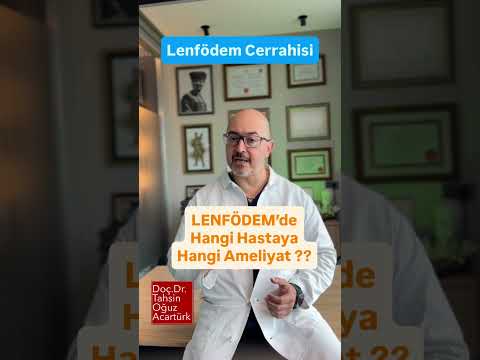 Hangi lenfödem ameliyatı size uygun?
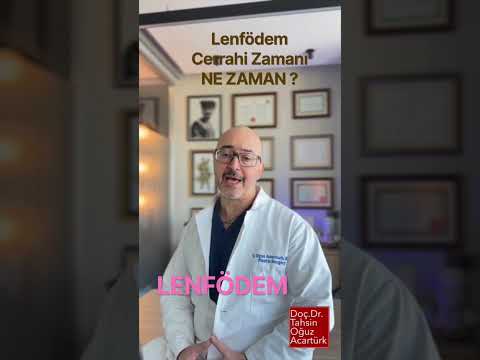 Lenfödemde cerrahi ne zaman: erken mi, geç mi?
Frequently asked questions
Which specialist treats lymphedema?
Plastic and Reconstructive Surgery for surgical treatment, Physical Medicine and Rehabilitation for conservative treatment. These two specialties are complementary, not alternatives.
Should I go to physiotherapy first?
Physiotherapy is the foundation of treatment and is the first step for most patients. However, assessing surgical options in the early stage is also important, because intervening while the lymphatic channels still work is more effective than intervening after the tissue has hardened. Ideally the two assessments run in parallel.
Does every plastic surgeon perform lymphedema surgery?
No. Lymphatic microsurgery requires separate experience; it involves working under the microscope with channels 0.3–0.8 mm in diameter. It is reasonable to ask about the surgeon's microsurgical experience and the centre's imaging facilities.
Are these operations performed in state hospitals?
Lymphatic microsurgery is performed at some university and training-and-research hospitals. The number of centres is limited; confirming that a centre works in this field before applying will save time.
Which investigations are requested for lymphedema?
ICG lymphography and lymphoscintigraphy are most often used; MR lymphangiography may be preferred in advanced and complex cases. Circumference measurements and clinical assessment are performed in every patient.
Is it right to seek a second opinion?
Yes, particularly for a surgical decision. In lymphedema the stage and imaging findings directly determine the treatment option; an assessment from a different centre may clarify your decision.
Doç. Dr. Tahsin Oğuz Acartürk
Plastic, Reconstructive & Aesthetic Surgery · Oral & Maxillofacial Surgery · University of Pittsburgh
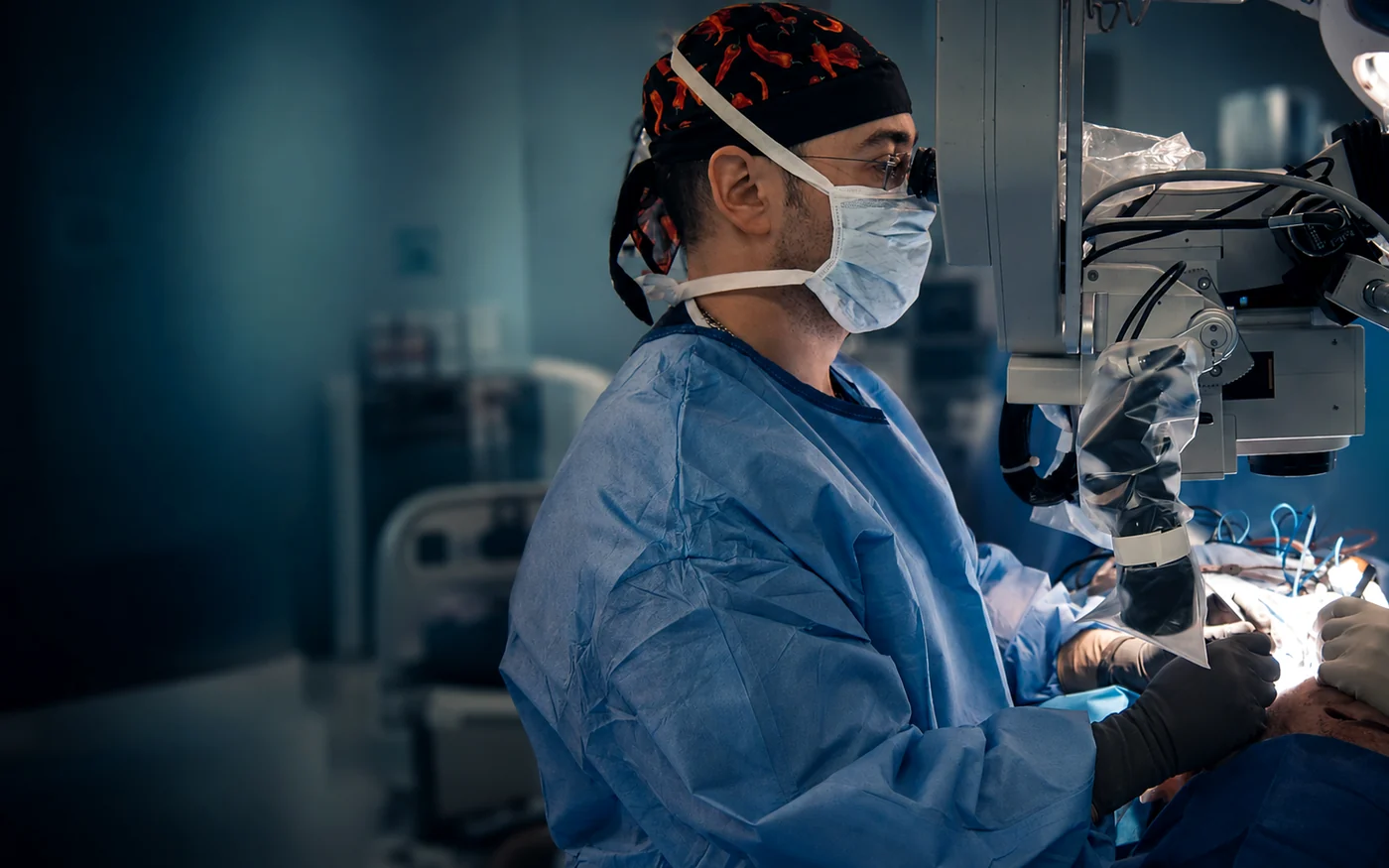
Experience in this field: Lymphedema microsurgery is a distinct field within plastic surgery — not every plastic surgeon performs these operations. Assoc. Prof. Dr. Acarturk has performed 600+ microsurgical cases at the University of Pittsburgh, participates in the work of the European lymphatic microsurgery group and has presented at the World Congress of Lymphology.
- Former Director of Head and Neck Reconstruction, University of Pittsburgh — 600+ microsurgical cases
- Participation in the European lymphatic microsurgery group
- Presentation at the World Congress of Lymphology
The first step towards the right department
Tell us when the swelling began, which treatments you have received and what reports you hold; we will determine together which assessment suits you.