Aesthetic Surgery
Gynecomastia (male breast enlargement)
Gynecomastia is enlargement of breast tissue in men. It affects roughly one in three men at some point in life. It does not resolve with exercise or diet, because the problem is glandular tissue rather than fat. Surgery is the only lasting and effective solution.
Written and medically reviewed by: Doç. Dr. Tahsin Oğuz Acartürk — Plastic, Reconstructive & Aesthetic Surgery; University of Pittsburgh. Last updated:
What is gynecomastia and why does it occur?
Gynecomastia is enlargement of the male breast gland due to hormonal imbalance. It must be distinguished from simple fat accumulation (pseudogynecomastia): glandular tissue is felt as a firm disc beneath the areola, whereas fat is soft and diffuse.
Main causes
- Puberty: the most common cause. The majority resolve spontaneously within 1–2 years.
- Medication: some blood pressure drugs, gastric medicines, antidepressants and prostate drugs
- Anabolic steroids and performance enhancers
- Hormonal disorders: thyroid, liver and testicular conditions
- Weight gain and ageing
An underlying cause should be investigated before surgery. One-sided, rapidly growing or firm and irregular masses require further investigation. In cases beginning at puberty, 1–2 years of observation is usual.
Grading and choice of method
| Grade | Appearance | Approach |
|---|---|---|
| Grade 1 | Limited enlargement around the areola, no excess skin | Gland excision ± liposuction |
| Grade 2 | Moderate enlargement, limited excess skin | Gland excision + liposuction |
| Grade 3 | Marked enlargement with excess skin | Excision + liposuction + skin tightening |
| Grade 4 | Female breast appearance, low nipple position | Excision + skin removal + nipple repositioning |
In grades 1 and 2 the incision remains at the lower border of the areola and the scar is hidden in the colour transition. Grades 3 and 4 may require additional incisions; this is discussed openly during planning.
Performing liposuction alone is the most common reason gynecomastia recurs. Glandular tissue cannot be removed by liposuction; it remains as a firm disc beneath the areola and the complaint persists.
The recovery process
- STEP 1 — FIRST CONTACTInitial contact via WhatsApp or the form, based on your expectations, medical history and any photographs.
- STEP 2 — EXAMINATION AND PLANNINGAssessment of your anatomy and open discussion of applicable techniques, risks and realistic expectations.
- STEP 3 — PREPARATIONBlood tests, anaesthetic assessment, adjustment of smoking and blood-thinning medication.
- STEP 4 — SURGERY1–2 hours under general anaesthesia or sedation, with same-day discharge for most patients.
- STEP 5 — FIRST DAYSA compression vest is worn from day one. Bruising and swelling peak on days 3–5.
- STEP 6 — RETURN AND FOLLOW-UPReturn to desk work in 3–7 days. Compression is worn for 4–6 weeks and chest exercises are deferred for 6 weeks. The final shape settles at 3–6 months.
- Temporary firmness beneath the areola is normal
- Temporary change in nipple sensation may occur and returns over months
- Maintaining the result depends on weight stability and avoiding steroids
Frequently asked questions
Will exercise resolve it?
No. Exercise can reduce fatty tissue but does not remove glandular tissue. The firm tissue beneath the areola does not respond to exercise; surgery is required.
Does it recur after surgery?
When the glandular tissue is fully removed, recurrence is not expected. However, anabolic steroid use, significant weight gain or a new hormonal problem can restart the process.
Will the scar be visible?
The incision is placed at the lower border of the areola, in the transition between dark and light skin. Scars healing along this line become indistinct over time. Higher grades may require additional scars.
Can it be operated on during puberty?
Usually 1–2 years of observation is advised, as most cases resolve spontaneously. However, where the social and psychological impact is marked and the picture has stabilised, earlier surgery may be considered.
Is it covered by insurance?
In some circumstances, particularly with pain and documented hormonal pathology, cover may be available. Conditions vary by policy.
When can I train my chest again?
Usually after 6 weeks, gradually and with medical approval. Heavy chest exercise started too early increases swelling and delays healing.
Doç. Dr. Tahsin Oğuz Acartürk
Plastic, Reconstructive & Aesthetic Surgery · Oral & Maxillofacial Surgery · University of Pittsburgh
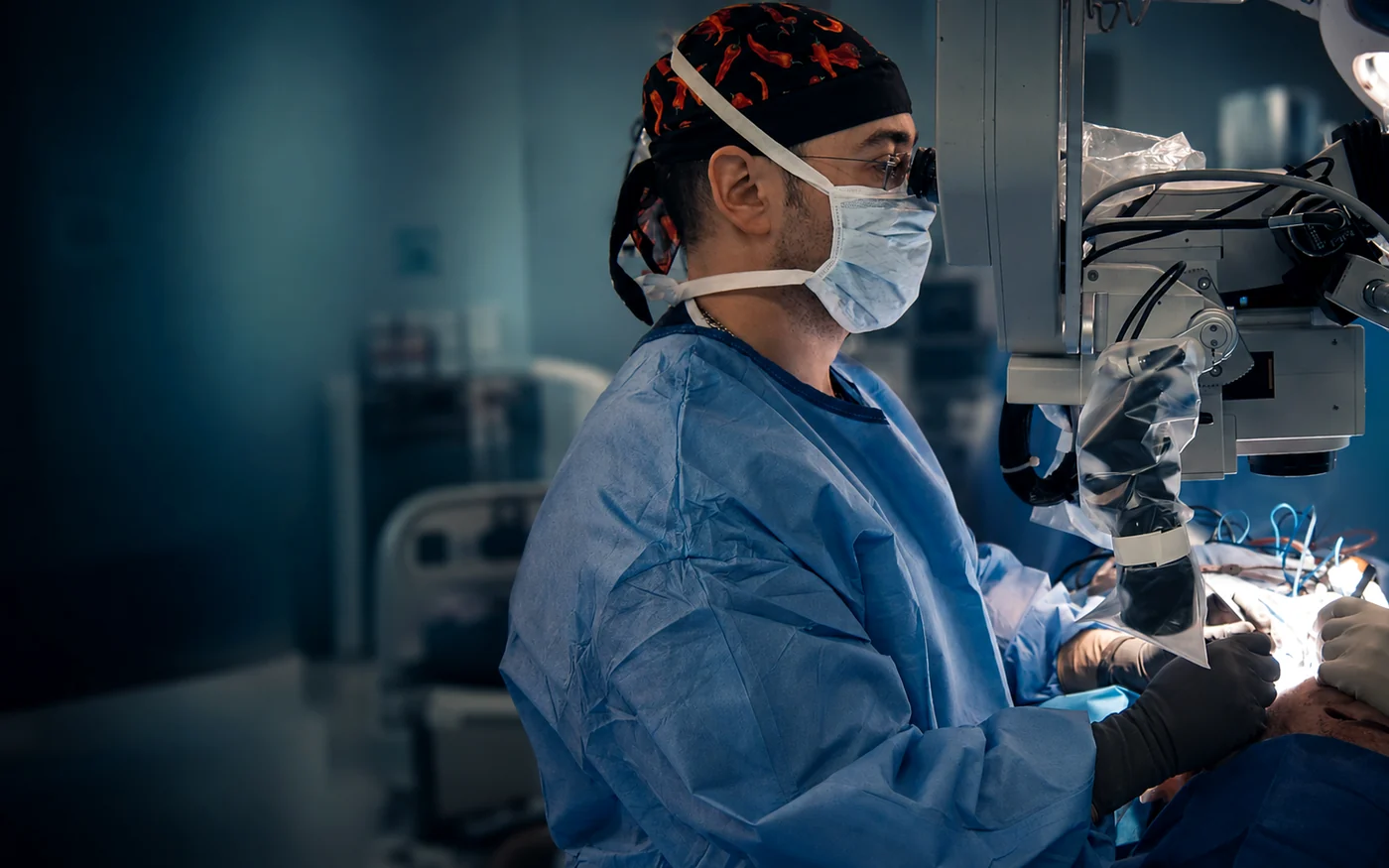
Experience in this field: What determines the result in gynecomastia surgery is the balance between removing the glandular tissue completely and leaving a natural contour on the chest wall. Assoc. Prof. Dr. Acarturk's background in breast surgery and body contouring allows both goals to be pursued together.
- Many years of practice in breast surgery
- Experience in liposuction and contour surgery
- Active surgical practice in the United States and Türkiye
Gynecomastia assessment
Tell us how long it has been present, any medication or supplements you use, and send front and side photographs if you have them.