Reconstructive Surgery
Neurofibromatosis surgery
Neurofibromatosis type 1 (NF1) is an inherited condition in which benign tumours called neurofibromas develop in the skin and along the nerves. When neurofibromas cause pain, bleeding, loss of function or a marked change in appearance, they can be removed surgically and the area reconstructed.
Written and medically reviewed by: Doç. Dr. Tahsin Oğuz Acartürk — Plastic, Reconstructive & Aesthetic Surgery; University of Pittsburgh. Last updated:
What is neurofibromatosis?
Neurofibromatosis type 1 is an inherited condition caused by a change in the NF1 gene, occurring in roughly one in every 3,000 births. It is autosomal dominant: if one parent has it, the chance of passing it on to a child is 50 per cent. In about half of patients, however, there is no family history of NF1.
The best-known features are café-au-lait spots on the skin, freckling in the armpits and groin, and neurofibromas. Neurofibromas are benign tumours arising from the nerve sheath; they usually increase in number from adolescence onwards.
There are other forms of neurofibromatosis, such as NF2 and schwannomatosis. This page describes the surgical treatment of neurofibromas that develop in the skin and soft tissues in NF1.
Types of neurofibroma and the surgical approach
Surgical planning depends on the type, size and location of the neurofibroma.
| Type | Appearance | Surgical approach |
|---|---|---|
| Cutaneous neurofibroma | Soft, small bumps on or in the skin; there may be many | Excision individually or in sessions |
| Subcutaneous neurofibroma | Firm nodules felt under the skin, sometimes tender | Excision; planned according to the nerve involved |
| Plexiform neurofibroma | A large mass spreading along a nerve and blending into soft tissue | Debulking and reconstruction |
Because plexiform neurofibromas blend into surrounding tissue and have a rich blood supply, complete removal is not always possible. In that case the aim is to reduce the mass safely while preserving nerves and vessels, and to improve the function and shape of the area.
When is surgery needed?
Not every neurofibroma needs to be removed. The decision is made together, based on the symptoms the tumour causes and the patient's expectations.
- Neurofibromas that are painful, itchy or irritated by clothing and belts
- Lesions that bleed or cause recurrent wounds
- Masses that make the eyelid droop or restrict mouth or joint movement
- Marked asymmetry or change in appearance of the face, neck or body
- Growing tumours that affect daily and social life
Rapid growth, new and persistent pain, hardening or new weakness are important warning signs. Because malignant change can rarely occur in plexiform neurofibromas, these findings should be assessed without delay with imaging and, if needed, a biopsy.
How is the operation performed?
- AssessmentExamination and MRI define the boundaries of the tumour and its relationship to nerves and vessels. The surgical plan is based on this information.
- ExcisionCutaneous neurofibromas are removed one by one with attention to the scar; when there are many lesions, staged sessions are planned. In plexiform neurofibromas the mass is reduced while important structures are preserved.
- Bleeding controlBecause neurofibromas have a rich blood supply, particular care is taken to control bleeding during surgery.
- ReconstructionThe resulting tissue gap is closed directly or reconstructed with a local flap or a microsurgical free flap, depending on the site. On the face, sagging structures such as the eyelid, eyebrow and cheek can be suspended and repositioned.
- Follow-upWound healing and any newly developing lesions are monitored with regular check-ups.
Face and head-and-neck region
Plexiform neurofibromas of the face can cause eyelid drooping, facial asymmetry and soft-tissue sagging. In this region the aim, besides reducing the mass, is to preserve the function of the eye, mouth and facial expression and to restore symmetry as far as possible. In extensive cases treatment may be planned in more than one stage.
What to expect after surgery
A removed neurofibroma does not usually recur in the same place. However, because NF1 is an inherited condition, new neurofibromas may develop elsewhere in the body over time. For this reason treatment is usually continued with procedures planned as needed rather than a single operation.
If part of a plexiform neurofibroma has been left behind, the remaining tissue may grow again over time. For some plexiform neurofibromas that are not suitable for surgical removal, drug treatments may also be considered.
- Fine scars remain where cutaneous neurofibromas are removed; scar planning is part of the operation.
- After larger plexiform neurofibroma operations, recovery can take several weeks depending on the site and reconstruction method.
- Regular check-ups allow new or growing lesions to be noticed early.
Results of any surgical or interventional procedure vary from person to person; the treatment plan is set individually based on examination and imaging findings.
Frequently asked questions
Which doctor should I see for neurofibromatosis surgery in Izmir?
Removal of neurofibromas that develop in the skin and soft tissues, and reconstruction of the area, fall within plastic, reconstructive and aesthetic surgery. Assoc. Prof. Dr. Tahsin Oguz Acarturk performs the surgical treatment of neurofibromas and, where needed, flap reconstruction in Bayrakli, Izmir.
Do neurofibromas come back after surgery?
A removed neurofibroma does not usually recur in the same place. However, because NF1 is inherited, new neurofibromas may develop in other areas over time. In plexiform neurofibromas, tissue left behind may grow again.
Can many neurofibromas on the skin be removed surgically?
Yes. Cutaneous neurofibromas that cause discomfort or affect appearance can be removed one by one. When there are many, the procedure is planned in sessions, starting with the priority areas.
Can a plexiform neurofibroma be removed completely?
Some small, well-defined plexiform neurofibromas can be removed completely. In those that are large and blend into surrounding tissue, the aim is to reduce the mass without damaging nerves and vessels and to improve the function and appearance of the area.
Is neurofibromatosis inherited?
Yes. NF1 is autosomal dominant; if one parent has it, each child has a 50 per cent chance of inheriting it. In about half of patients, however, the condition appears in the family for the first time.
Can neurofibromas turn into cancer?
Cutaneous neurofibromas are benign and do not turn into cancer. In plexiform neurofibromas, malignant change can rarely occur. If rapid growth, persistent pain or hardening is noticed, an assessment should be made.
Sources
The medical information on this page is based on the following sources.
Doç. Dr. Tahsin Oğuz Acartürk
Plastic, Reconstructive & Aesthetic Surgery · Oral & Maxillofacial Surgery · University of Pittsburgh
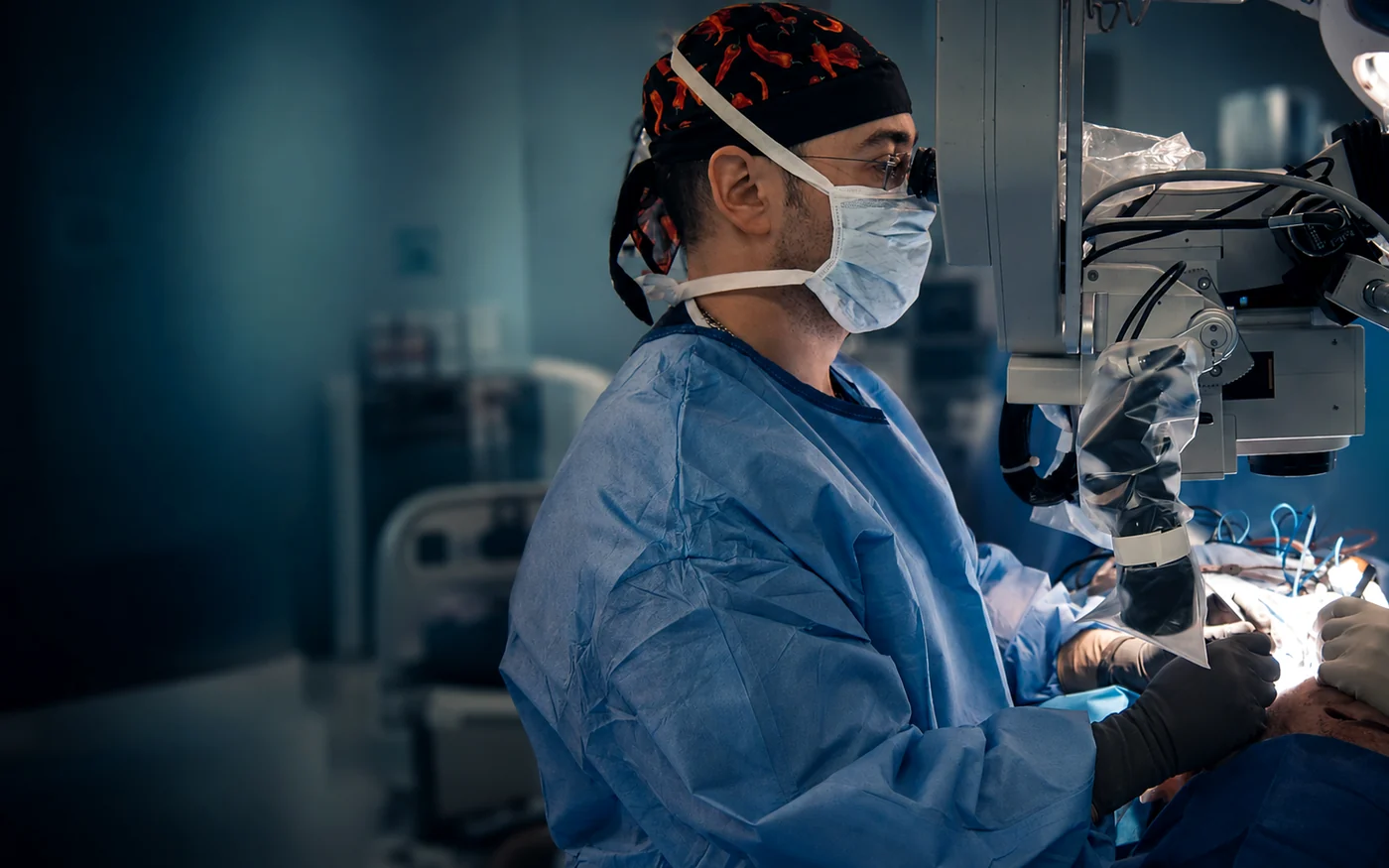
Experience in this field: Neurofibromatosis surgery requires the safe removal of tumours that are rich in blood vessels and spread into surrounding tissue, followed by reconstruction of the area for both function and appearance. Assoc. Prof. Dr. Acarturk served as Director of Head and Neck Reconstruction at the University of Pittsburgh and has performed more than 600 microsurgical and flap procedures.
- Former Director of Head and Neck Reconstruction, University of Pittsburgh
- 600+ microsurgical and flap cases
- Subspecialty in Oral, Facial and Maxillofacial Surgery
Assessment for neurofibromatosis
Tell us where the neurofibromas are, which symptom bothers you most, and send your MRI report if you have one. Adding photographs makes the preliminary assessment easier.