Reconstructive Surgery
Hidradenitis suppurativa surgery and reconstruction
Hidradenitis suppurativa is a chronic skin disease that causes recurrent painful swellings, abscesses and draining tunnels in the armpits, groin and under the breasts. In its early stages it can be controlled with medication. Once permanent tunnelling and scarring have set in, the only lasting solution is complete removal of the diseased area followed by reconstruction.
Written and medically reviewed by: Doç. Dr. Tahsin Oğuz Acartürk — Plastic, Reconstructive & Aesthetic Surgery; University of Pittsburgh. Last updated:
What is hidradenitis suppurativa?
Hidradenitis suppurativa (HS), also known in the literature as acne inversa, is a chronic and recurring skin disease. What people commonly call a "sweat gland infection" or a "recurring boil in the armpit" is, in its tunnelling and repeating form, usually this condition.
The disease begins with blockage of a hair follicle. The blocked follicle swells, becomes inflamed and ruptures; as it heals it leaves behind channels beneath the skin called sinus tracts. These tracts connect to one another, discharge fluid, and with every flare the scar tissue increases.
The limit of repeated drainage: Draining an abscess relieves the pain of the moment, but it leaves the tunnels and the diseased sweat-gland field in place. This is why the problem often returns in the same area within a few months. Repeated drainage is not a lasting treatment for the disease.
Most commonly affected areas
- Armpits
- Groin and genital region
- Under and between the breasts
- Buttocks and perianal region
- Nape of the neck and lower back
Hurley staging: at what stage is surgery needed?
Treatment is decided according to stage. The classification used is Hurley staging, which has three levels.
| Stage | Findings | Primary treatment |
|---|---|---|
| Hurley 1 | Isolated abscesses, no tracts or scarring | Medical treatment |
| Hurley 2 | Recurrent abscesses, separate tracts and scars | Medical treatment + limited surgery |
| Hurley 3 | Interconnected tracts across the whole region | Wide excision and reconstruction |
In early stages the disease can often be controlled with medication, and surgery may not be required. This page describes situations that have progressed despite medical treatment, or that presented at an advanced stage from the outset.
How is the operation performed?
The core principle of surgery in advanced HS is complete removal of the diseased sweat-gland field. Limited excision increases the risk of recurrence in the tissue left behind.
- MappingThe boundaries of the involved area are defined. A tunnel network wider than the visible openings is the rule rather than the exception.
- Wide excisionThe diseased area is removed completely down to healthy tissue. The aim is not a smaller scar but leaving no diseased tissue behind.
- Closure planThe resulting defect is closed according to site and size — directly if small, with a flap if wide and in a mobile region.
- RecoveryTwo to six weeks of activity restriction depending on the site, followed by an exercise programme to prevent contracture.
Closure methods
- Local flap: Adjacent healthy tissue is advanced into the defect. Preferred in mobile regions such as the armpit; skin quality and movement are preserved.
- Perforator flap: For wide defects, a block of tissue carried on its own vessel. Markedly reduces the risk of contracture.
- Skin graft: An option for very large areas. Used alone over a joint, however, it carries a risk of contracture.
- Secondary healing: Allowing the wound to close on its own. It takes a long time and the scar quality is poor; not preferred in mobile regions.
The armpit and groin are regions where the arm and leg move. Closure here must do more than cover the wound; it must not restrict movement. That is what flap selection is really about.
Can it come back, and how long does recovery take?
Recurrence is possible even after wide excision. Surgery removes the disease from the excised area; however, because HS involves a systemic predisposition, it can start again in a different region.
The literature shows that wide excision provides a markedly lower recurrence rate in the same area than limited surgery or repeated drainage. A definitive result cannot be promised, but a well-planned operation can end the cycle of repeated abscess drainage.
- Smoking worsens both the course of the disease and wound healing; stopping is part of the treatment.
- Weight control reduces flare frequency, particularly with groin and inframammary involvement.
- Regular check-ups continue after surgery; where needed, medical treatment is planned alongside the operation.
No surgical technique guarantees a 100% permanent result in HS; the treatment plan is set for each patient according to stage and the regions involved.
Videos
Assoc. Prof. Acartürk Explains
Tap a cover to play the video right here. Videos are in Turkish.
 Köpek memesi (hidradenit) cerrahi tedavisi
Frequently asked questions
Which specialist treats hidradenitis suppurativa?
In early stages (Hurley 1 and some Hurley 2 cases) medication may be sufficient. Where there is tunnelling under the skin, permanent scarring and recurrent discharge, assessment by a plastic and reconstructive surgeon is needed for removal of the diseased area and reconstruction.
My abscesses keep being drained but they keep coming back — why?
Drainage only empties the inflammation inside; it leaves in place the tunnels and the diseased sweat-gland field that produce the disease. That is why the problem returns to the same spot within months. A lasting result requires complete removal of the diseased area.
Will the surgical scar be large?
Because the area removed is wide, the scar is noticeable; a narrower excision made to reduce the scar increases the risk of recurrence. The priority here is stopping the disease and preserving movement in the region. Flap closure ensures the scar sits where it will not restrict movement.
Is hidradenitis suppurativa contagious?
No. Although the discharge and inflammation may give the impression of a contagious infection, HS does not spread from person to person. It is a chronic skin disease that begins with follicular blockage and in which the immune system also plays a role.
How long does recovery take?
It depends on the site and the closure method. With flap reconstruction in the armpit, activity restriction is usually two to four weeks and full healing six to eight weeks. In large areas closed with a graft the period is longer and physiotherapy may be needed.
Does medical treatment continue after surgery?
It depends on the patient. Surgery removes the disease from the excised area but does not eliminate the systemic predisposition. Where needed, medical treatment is continued after the operation.
Sources
The medical information on this page is based on the following sources.
Doç. Dr. Tahsin Oğuz Acartürk
Plastic, Reconstructive & Aesthetic Surgery · Oral & Maxillofacial Surgery · University of Pittsburgh
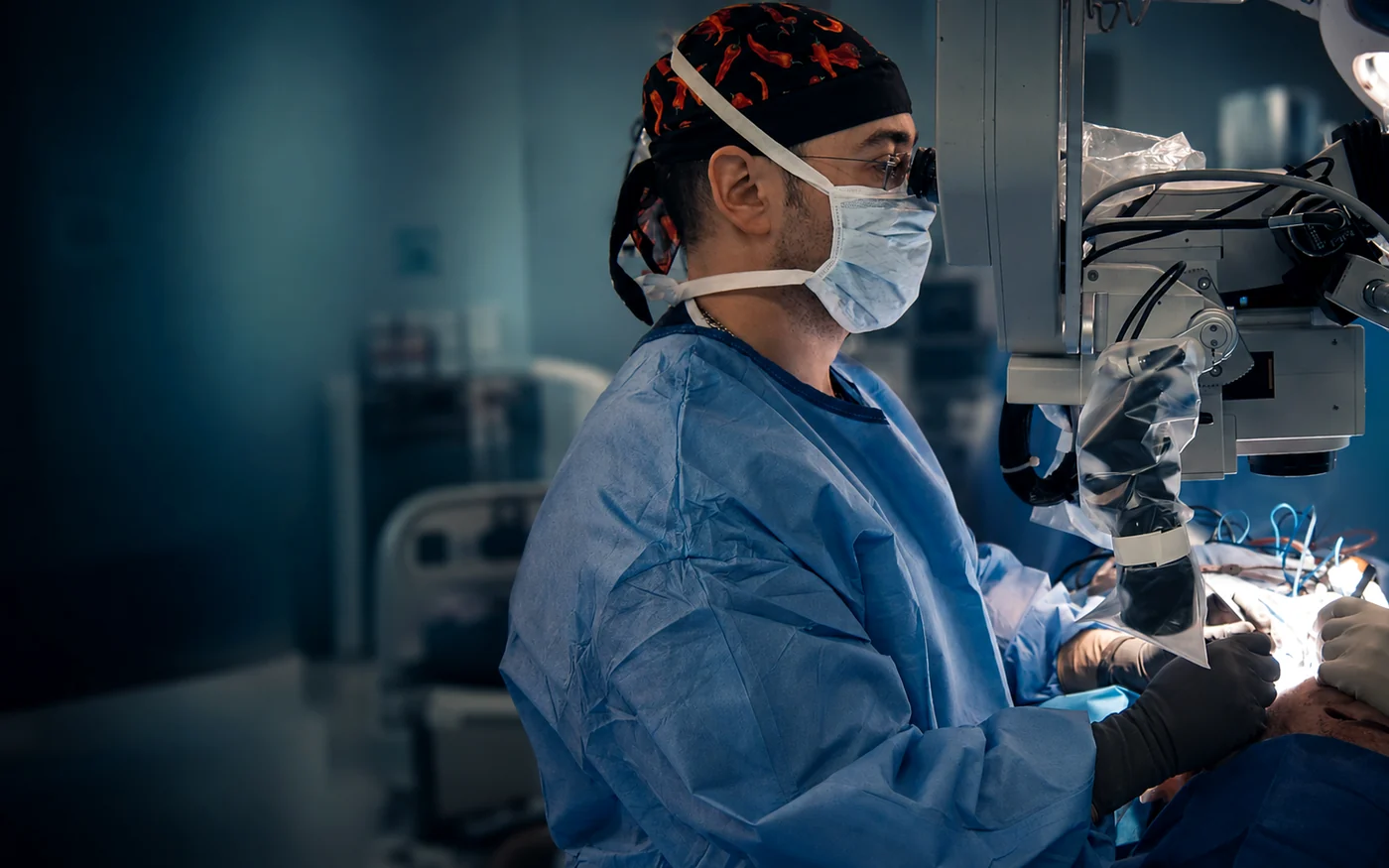
Experience in this field: In advanced hidradenitis suppurativa the only durable solution is wide excision followed by reconstruction. This is a fundamentally different operation from repeated abscess drainage: the entire diseased sweat-gland field must be removed and the resulting large defect closed with a flap or graft. Assoc. Prof. Dr. Acarturk's experience in free tissue transfer and flap surgery is decisive when planning closures in mobile regions such as the armpit and groin, where a contracture must not be left behind.
- 600+ microsurgical and flap cases at the University of Pittsburgh
- Experience in scar and contracture reconstruction after burns and trauma
- Subspecialty in Oral, Facial and Maxillofacial Surgery
Let us assess your hidradenitis suppurativa
Tell us which areas are involved, how many years you have had symptoms and which treatments have already been tried. Add photographs if you can — these are enough for staging and for deciding whether surgery is required.