Reconstructive Surgery
Burn, trauma and post-radiation reconstruction
Tissue damage after burns, trauma and radiotherapy does not merely leave a scar; it restricts movement, causes pain and sometimes prevents wounds from closing. In these conditions the aim is not to hide the scar but to restore the function and quality of the tissue.
Written and medically reviewed by: Doç. Dr. Tahsin Oğuz Acartürk — Plastic, Reconstructive & Aesthetic Surgery; University of Pittsburgh. Last updated:
Scar and contracture surgery
Scar tissue formed as a burn heals contracts over time. When that contraction crosses a joint it restricts movement — it can prevent the head from turning at the neck, the arm from lifting at the axilla, or the fingers from opening in the hand. This is called a contracture and requires surgery.
Methods used
- Z-plasty and local flaps: the direction of the scar line is changed to redistribute tension. Effective in narrow band contractures.
- Skin grafting: covering large areas with a thin layer of skin taken from an intact site.
- Tissue expansion: adjacent healthy skin is expanded gradually and moved to replace the scar. Superior for colour match on the scalp and face.
- Free tissue transfer: tissue transferred with its vessels for deep and extensive losses.
Timing matters in scar surgery. Operating early on an immature, red and raised scar can worsen the result. Except for contractures that threaten function, 6–12 months of waiting is usual, during which compression garments, silicone and physiotherapy are used.
Reconstruction of irradiated tissue
Radiotherapy is effective in cancer treatment but leaves permanent changes in the tissue it passes through: small vessels narrow, tissue hardens and blood flow decreases. Wounds close slowly in this tissue, the risk of complications after surgery rises, and ordinary reconstruction techniques fall short.
Fat tissue and stem-cell assisted treatment
Cells obtained from the patient's own fat tissue, injected into the irradiated area, can improve tissue quality: the skin softens, elasticity increases and new vessel formation is supported. Assoc. Prof. Dr. Acarturk contributed as a researcher to work in this field at the University of Pittsburgh and uses the technique particularly in cancer, burn and post-radiation cases.
- Injection is usually performed over several sessions
- It can be used to prepare tissue before major reconstruction
- Improved comfort is reported in painful, hardened scars
Tissue loss after trauma
Tissue loss after road traffic accidents, industrial injuries and gunshot wounds cannot be closed by simple means because bone or tendon is exposed. These cases require the upper rungs of the reconstructive ladder.
- STAGE 1 — WOUND PREPARATIONRemoval of dead tissue, infection control and negative pressure wound therapy where required.
- STAGE 2 — SKELETAL REPAIRFixation of fractures and, where needed, filling of bone defects.
- STAGE 3 — COVERAGEProviding living, well-perfused cover with a local flap or free tissue transfer.
- STAGE 4 — FUNCTIONAddressing tendon, nerve and joint problems in a planned sequence.
- STAGE 5 — REFINEMENTContour corrections, fat grafting and scar revision.
Assoc. Prof. Dr. Acarturk received intensive trauma surgery training during his residency and gained experience in burn treatment and war injuries during his post at Gülhane Military Medical Academy.
Videos
Assoc. Prof. Acartürk Explains
Tap a cover to play the video right here. Videos are in Turkish.
 Yanık sonrası kulak onarımı — kaburga kıkırdağı ile
Frequently asked questions
When can I have surgery for my burn scar?
Except for contractures that threaten function, the scar is usually allowed to mature first, which takes 6–12 months. During this period compression garments, silicone and physiotherapy improve scar quality.
Will the burn scar disappear completely?
No. Scar tissue cannot be eliminated, but its position, direction and quality can be changed. The aim is not to make it invisible but less conspicuous and no longer restricting.
Can an irradiated area be operated on?
It can, but healing is slow and the risk of complications is high. Reconstruction with your own tissue is preferred in these cases, sometimes preceded by fat grafting to improve tissue quality.
Does fat grafting really help scars?
Softening, increased elasticity and reduced pain are reported in irradiated and hardened tissue. Results vary between individuals and more than one session is usually needed.
How are burn contractures handled in children?
As a child grows, scar tissue does not grow at the same rate and contractures can recur. Periodic revisions may therefore be needed throughout the growth period, and planning accounts for this.
Doç. Dr. Tahsin Oğuz Acartürk
Plastic, Reconstructive & Aesthetic Surgery · Oral & Maxillofacial Surgery · University of Pittsburgh
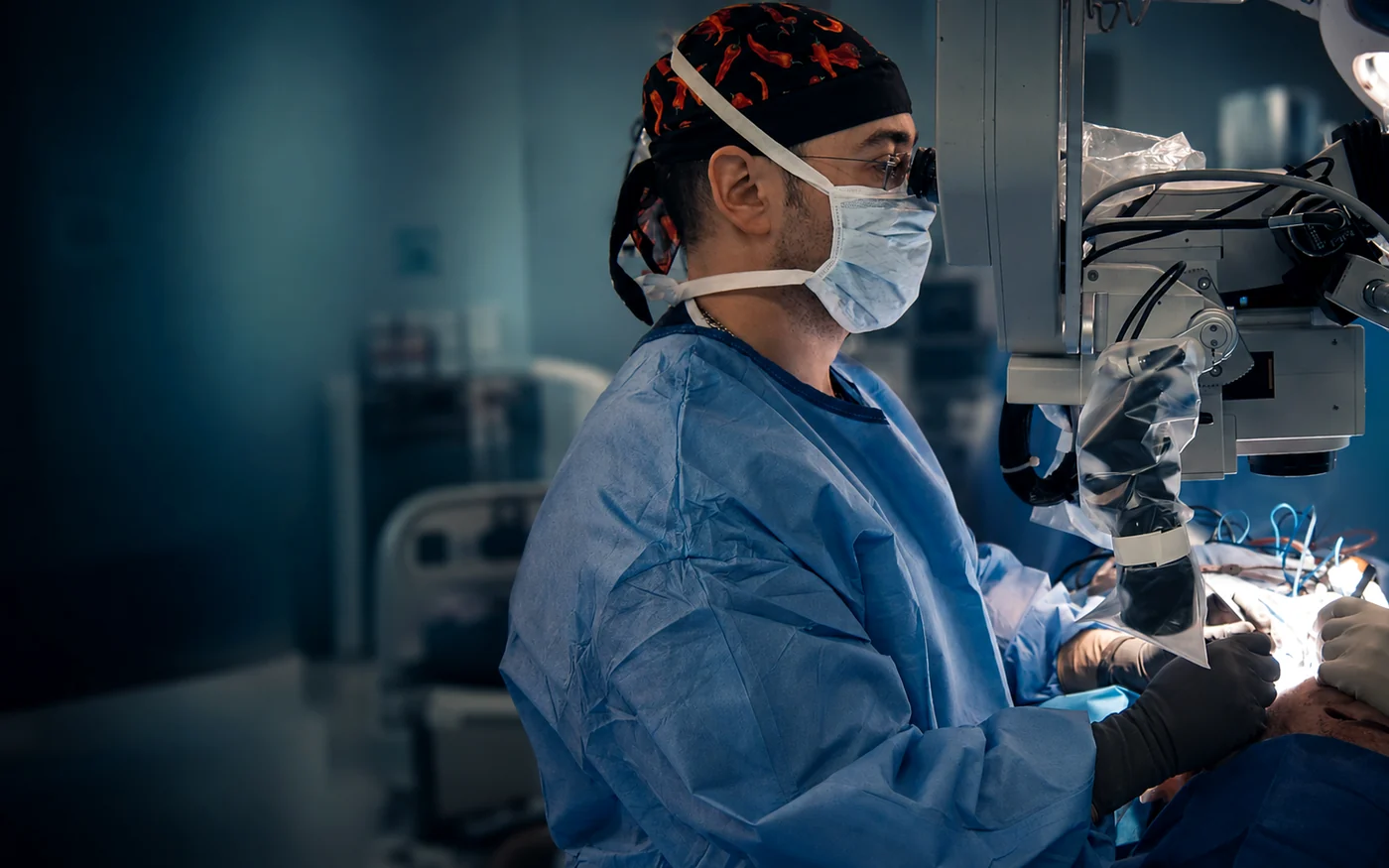
Experience in this field: Burn and trauma reconstruction is an area Assoc. Prof. Dr. Acarturk worked in during both his military service and his academic career. He gained experience in burn treatment and war injuries during his post at Gülhane Military Medical Academy, and contributed as a researcher at the University of Pittsburgh to work on fat and stem-cell assisted treatment of irradiated tissue.
- Experience in burn treatment and war injuries at GATA
- Stem cell and tissue engineering research at the University of Pittsburgh
- Three years of trauma and vascular surgery training
Reconstruction assessment
Tell us when the injury or treatment occurred, the procedures performed and the limitations you currently have; send photographs if you have them.