Reconstructive Surgery
Microtia: congenital absence of the ear and its reconstruction
Microtia is the congenital underdevelopment or absence of the outer ear. It occurs in roughly one in every 6,000–10,000 births. Using the child's own rib cartilage, a new ear framework can be sculpted to build a natural-looking ear that lasts a lifetime.
Written and medically reviewed by: Doç. Dr. Tahsin Oğuz Acartürk — Plastic, Reconstructive & Aesthetic Surgery; University of Pittsburgh. Last updated:
What is microtia?
Microtia results from development of the outer ear that fails to complete during the early weeks of pregnancy. It is more often one-sided and most commonly affects the right ear. Absence of the outer ear is frequently accompanied by a narrow ear canal or none at all (atresia).
Grading
- Grade 1: The ear is small but most structures are recognisable.
- Grade 2: The lower part of the ear is present; the upper structures have not developed.
- Grade 3: The most common form. Only a peanut-shaped cartilage remnant and an earlobe are present; the ear canal is usually absent.
- Grade 4 (anotia): Ear tissue is entirely absent.
Microtia most often occurs in isolation, but it can be part of a syndrome. The first assessment is therefore not limited to the ear; facial symmetry, jaw development and hearing are examined together.
Hearing and speech development
The outer ear collects sound, but the real work of hearing is done by the inner ear. In one-sided microtia with a healthy opposite ear, speech development is usually normal. Even so, there may be difficulty locating the direction of sound and distinguishing speech in noisy environments.
In bilateral microtia the situation is different: hearing support must be provided early. This can be achieved with bone-conduction hearing devices and is critical for speech development.
Hearing assessment is separate from, and takes priority over, reconstruction of the outer ear. It is planned together with audiology and ENT teams; reconstructing the ear does not by itself improve hearing.
Surgical method and stages
The gold standard is to sculpt a three-dimensional ear framework from the child's own rib cartilage. Because it is the child's own tissue there is no risk of rejection, it grows with the child and it lasts a lifetime.
Why 8–10 years of age?
- Rib cartilage only reaches the thickness needed to carve a framework at this age
- The ear reaches roughly 85% of its adult size, allowing symmetry with the opposite ear
- The child is mature enough to take part in post-operative care
- It falls before the school years, when appearance becomes more significant
The stages
- STAGE 1 — FRAMEWORKRib cartilage is harvested, carved into an ear framework and placed into a skin pocket prepared at the ear site.
- STAGE 2 — EARLOBEThe existing earlobe is moved into the correct position and integrated with the framework. In some plans this is combined with the first stage.
- STAGE 3 — ELEVATIONThe ear is elevated from the head and tissue and a skin graft are placed behind it to give the ear its natural angle and depth.
Usually 4–6 months are left between stages. This time is needed for the tissue to settle and for its blood supply to mature.
Experience in this field
Microtia reconstruction is one of the areas of plastic surgery that most depends on repetition and manual skill. Cartilage carving directly determines whether the result will look natural.
Assoc. Prof. Dr. Acarturk takes part in volunteer surgical missions in Vietnam each year, performing microtia reconstruction, cleft lip and palate repair and brachial plexus surgery. Ear reconstruction was also among his areas of work during his fellowship at the University of Helsinki.
Rushing microtia reconstruction can permanently limit the result, both because of insufficient cartilage and because of symmetry. Correct timing is no less important than correct technique.
Videos
Assoc. Prof. Acartürk Explains
Tap a cover to play the video right here. Videos are in Turkish.
 Yanık sonrası kulak onarımı — kaburga kıkırdağı ile
Frequently asked questions
What is the right age for microtia surgery?
Because the rib cartilage must reach sufficient thickness and the ear must approach adult size, 8–10 years is generally recommended. This range may vary in bilateral cases and according to chest development.
How many operations are needed?
Usually 2–3 stages are planned, with 4–6 months between them. The number of stages depends on the grade of microtia and the tissue available.
Does taking cartilage from the ribs harm the child?
The donor cartilage area regenerates over time and chest development proceeds normally. Pain in the chest is expected in the first days after surgery and is managed.
Does the surgery improve hearing?
No. Reconstruction of the outer ear restores appearance; hearing is a separate matter, assessed together with audiology and ENT teams. Bone-conduction devices or separate hearing surgery are planned where required.
Is a prosthetic ear an option?
Adhesive or implant-retained prostheses are an option in some situations, particularly where cartilage is insufficient or the patient does not want surgery. However, reconstruction with the patient's own tissue is permanent and requires no daily care.
Will there be visible scars?
Scars form behind the ear and on the chest. The chest incision is hidden in the inframammary fold and the scars behind the ear lie in the shadow of the ear and hair; they become less noticeable over time.
Doç. Dr. Tahsin Oğuz Acartürk
Plastic, Reconstructive & Aesthetic Surgery · Oral & Maxillofacial Surgery · University of Pittsburgh
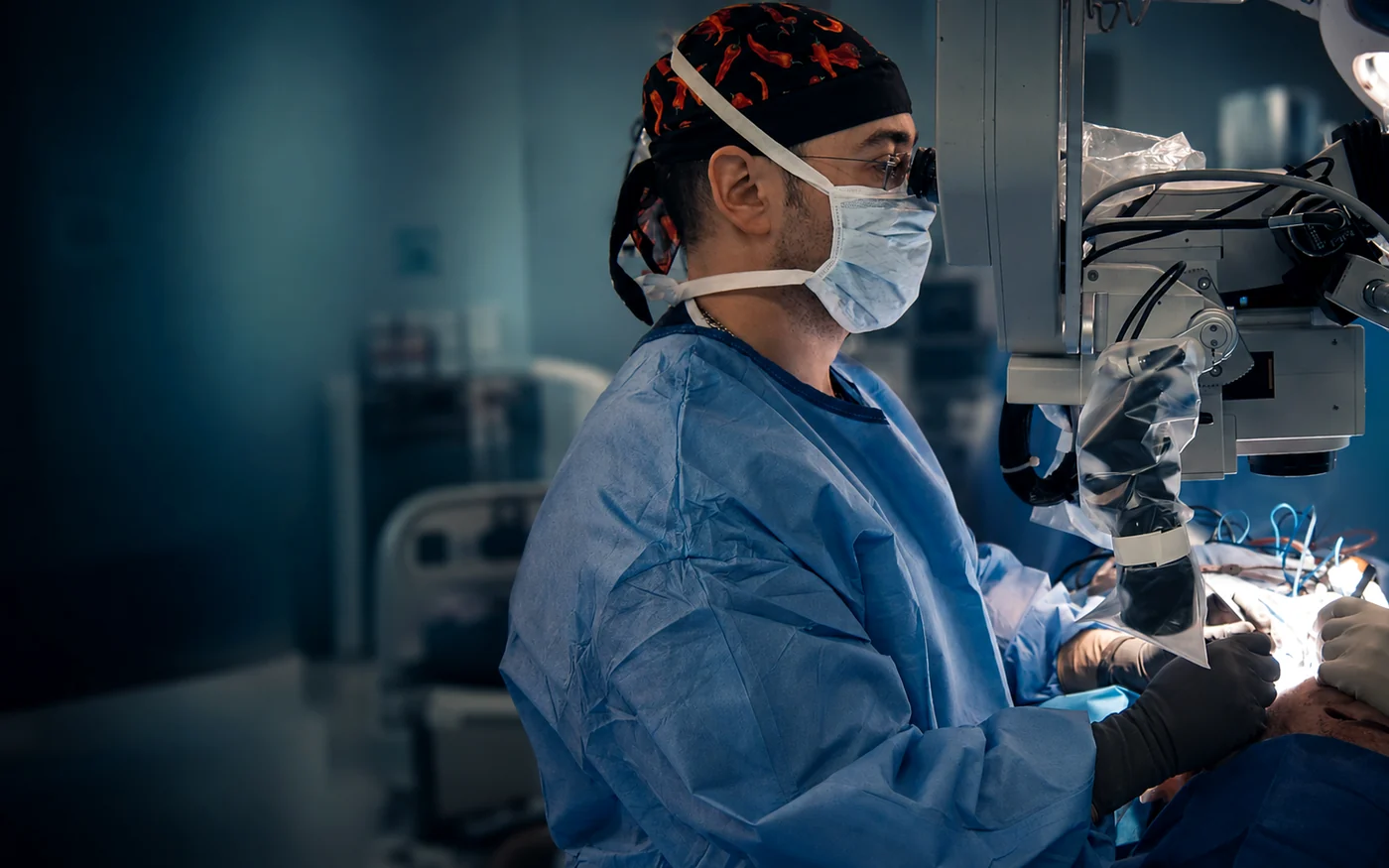
Experience in this field: Microtia reconstruction demands manual skill in cartilage carving and experience across many cases. Assoc. Prof. Dr. Acarturk worked on ear reconstruction during his fellowship at the University of Helsinki, and performs microtia reconstruction regularly on the volunteer surgical missions he joins in Vietnam each year.
- University of Helsinki — microsurgery and ear reconstruction fellowship
- Regular microtia surgery on volunteer missions in Vietnam
- Subspecialty in Oral & Maxillofacial Surgery
Microtia assessment
Send us your child's age, which ear is affected, any hearing test results and photographs. We will get back to you to arrange a planning consultation.