Reconstructive Surgery
Breast reconstruction after breast cancer
Breast reconstruction is not the end of cancer treatment; it is part of recovery. It can be performed with your own tissue or with an implant, at the same time as the mastectomy or after treatment is complete. The right timing determines your options.
Written and medically reviewed by: Doç. Dr. Tahsin Oğuz Acartürk — Plastic, Reconstructive & Aesthetic Surgery; University of Pittsburgh. Last updated:
Immediate or delayed?
Immediate reconstruction
Performed during the same operation as the mastectomy. Because the breast skin is preserved, the result is usually more natural, the patient never experiences a period without a breast, and the total number of operations is reduced. It is preferred where radiotherapy is not anticipated.
Delayed reconstruction
Performed after oncological treatment, particularly radiotherapy, is complete. Implants perform less well in irradiated tissue, so reconstruction with your own tissue comes to the fore in patients who receive radiotherapy.
The decision should be made together with your breast surgeon and radiation oncologist. Seeing a plastic surgeon before the mastectomy markedly widens the options available to you. Reconstruction does not make cancer follow-up more difficult and does not increase the risk of recurrence.
Reconstruction methods
DIEP flap — using your own tissue
Skin and fat from the lower abdomen are transferred to the chest with their supplying vessels. The abdominal muscle is not cut, which distinguishes this from the older TRAM technique; abdominal strength is preserved and the risk of hernia is reduced. The result is soft, drapes naturally and changes with your body as your weight changes.
Implant-based reconstruction
A tissue expander is placed first and gradually filled over several weeks to stretch the skin, then replaced with a permanent implant. It involves a shorter operation and faster recovery, but the risk of capsular contracture is high in irradiated tissue.
Latissimus dorsi flap
Muscle and skin taken from the back, usually combined with an implant. It is an option for patients whose abdominal tissue is insufficient or who have had previous abdominal surgery.
Volume refinement with fat grafting
Your own fat tissue is used to correct contour irregularities and to improve the quality of irradiated skin. This is usually a complementary stage.
Combined treatment with arm lymphedema
Removal of the axillary lymph nodes and radiotherapy can lead to lymphedema of the arm. In patients planned for breast reconstruction, both problems can be addressed in a single operation: vascularised lymph node transfer can be performed at the same time as the tissue transfer.
This spares the patient a second major operation and allows early intervention for lymphedema. For details, see our lymphedema surgery page.
If you notice early signs such as a feeling of heaviness in the arm, or rings and watches becoming tight, do not wait. In lymphedema, early intervention is markedly more effective than treatment after tissue hardening has set in.
Process and recovery
- STEP 1 — JOINT PLANNINGDecision on timing and method together with the breast surgeon and radiation oncologist.
- STEP 2 — PREPARATIONVascular mapping, assessment of abdominal tissue, smoking cessation and general preparation.
- STEP 3 — SURGERY6–8 hours for a DIEP flap; shorter for implant-based reconstruction. Hospital stay of 3–5 days.
- STEP 4 — FIRST 6 WEEKSLifting restrictions, abdominal care and a gradual return to activity.
- STEP 5 — 3–6 MONTHSSymmetry adjustments, surgery to the opposite breast if needed, and nipple–areola reconstruction.
Frequently asked questions
Does reconstruction hide a recurrence?
No. Studies show that breast reconstruction does not increase the risk of recurrence and does not make follow-up more difficult. Your oncological follow-up continues as normal.
What is the difference between DIEP and TRAM?
In a DIEP flap the abdominal muscle is not cut; only the vessels are dissected out of the muscle, so abdominal strength is preserved and the risk of hernia is reduced. In a TRAM flap part of the muscle is taken with the tissue.
What if I am going to have radiotherapy?
Implants perform less well in irradiated tissue and the risk of capsular contracture increases. For this reason, reconstruction with your own tissue and delayed reconstruction are generally preferred in patients who will receive radiotherapy.
Will I regain sensation?
Sensation in the transferred tissue is initially limited. Partial sensation may return over time; in some cases nerve coaptation can also be performed with the aim of restoring sensation.
What kind of scar will I have on my abdomen?
The incision is placed along the bikini line, similar to an abdominoplasty, and the navel is reshaped. The abdomen is also flattened as a result.
Only one breast was removed — can symmetry be achieved?
Yes. Reduction, lifting or augmentation of the opposite breast can be performed to achieve symmetry. This is usually planned as a second stage.
Sources
The medical information on this page is based on the following sources.
Doç. Dr. Tahsin Oğuz Acartürk
Plastic, Reconstructive & Aesthetic Surgery · Oral & Maxillofacial Surgery · University of Pittsburgh
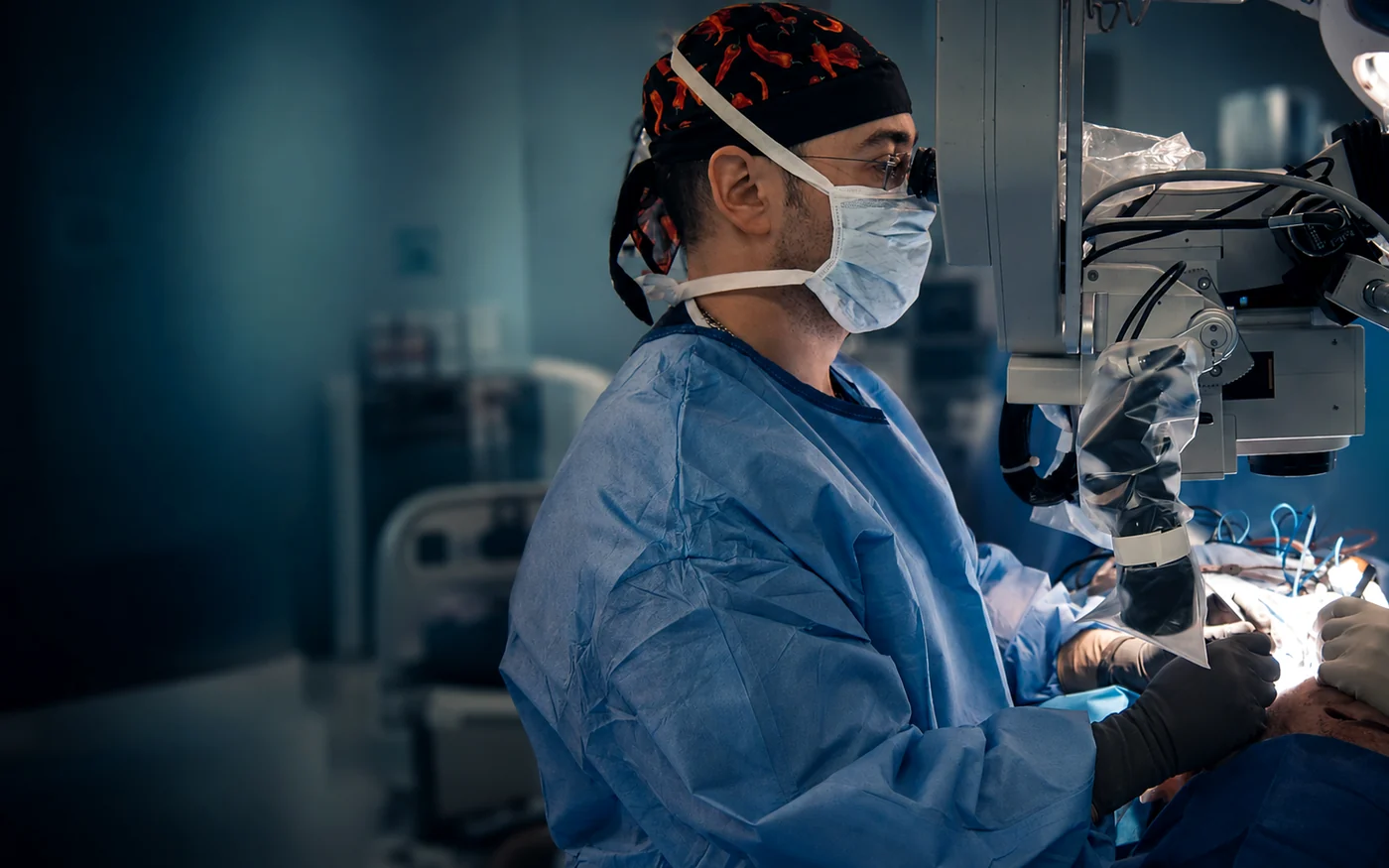
Experience in this field: Breast reconstruction requires microsurgery and aesthetic surgery to be considered together. Assoc. Prof. Dr. Acarturk has many years of practice in both free tissue transfer and breast aesthetics; because he also performs lymphedema microsurgery, he is able to plan breast reconstruction and arm lymphedema treatment in the same operation.
- 300+ free tissue transfer procedures
- Simultaneous planning with lymphedema microsurgery
- Breast surgery practice in the United States and peer referrals
Breast reconstruction assessment
Send us your diagnosis, the surgery planned or already performed, your radiotherapy status and any imaging you have. We will get back to you to coordinate with your oncology team.