Microsurgery Programme
Lymphedema symptoms and early signs
In lymphedema, time is the most valuable thing. A patient caught while the lymphatic channels still work has a wide range of treatment options; once the tissue hardens, the options narrow. This page explains what to take seriously, and when.
Written and medically reviewed by: Doç. Dr. Tahsin Oğuz Acartürk — Plastic, Reconstructive & Aesthetic Surgery; University of Pittsburgh. Last updated:
The earliest symptoms: felt before they are measured
The first symptom of lymphedema is usually not visible swelling. Most patients describe a change in sensation before any measurable difference has developed.
- Heaviness, fullness or tightness in the arm or leg
- A ring, watch, bracelet or sock beginning to feel tight
- Clothing feeling tight on one side only
- Tightness or shininess of the skin
- A slight sense of restriction in joint movement
Patients frequently explain these symptoms away as "I've put on weight" or "I'm tired" and postpone them for months. Yet this is the most valuable period for treatment. These complaints should be assessed even if measurements are still normal.
Findings of established lymphedema
- Persistent swelling: oedema that does not resolve when the limb is elevated
- Measurable difference: a difference in circumference compared with the opposite limb
- Pitting: a pit remains on pressure in the early stage; in advanced stages it does not, because the tissue has hardened
- Skin changes: thickening, hardening, an orange-peel appearance
- Recurrent cellulitis: attacks with fever, redness and pain
- Lymphorrhoea: leakage of clear fluid from the skin
- Loss of function: restricted movement, difficulty with daily tasks
The absence of pitting does not mean the oedema has resolved — on the contrary, it shows that the tissue has hardened with fibrosis and points to a more advanced stage. This distinction directly changes the treatment plan.
Self-assessment: what should you look for?
- 1 — STEMMER'S SIGNTry to pinch and lift the skin over your second toe (or your second finger in the hand) between thumb and forefinger. If the skin is thick and cannot be lifted, the sign is positive.
- 2 — CIRCUMFERENCE MEASUREMENTMeasure both limbs at the same points with a tape measure. Choose fixed reference points (for example 10 cm above the elbow). The difference between the two sides should be monitored.
- 3 — PITTING TESTPress with a finger on the swollen area for 10 seconds. A remaining pit indicates oedema; the absence of a pit may point to tissue hardening in an advanced stage.
- 4 — SYMMETRY AND FOOT/HANDIs the swelling one-sided? Does it extend to the top of the foot and the toes? These findings favour lymphedema.
- 5 — PHOTOGRAPHIC RECORDPhotograph both limbs together monthly, at the same angle and in the same light. This is the most practical way to notice slow change.
These checks do not replace a medical examination; their purpose is to help you notice change and consult at the right time.
When should you see a doctor?
- If swelling lasts longer than 3 months
- For new swelling after cancer treatment, particularly lymph node dissection or radiotherapy
- If you notice a growing difference in circumference between the two limbs
- If Stemmer's sign is positive
- If you have had an episode of cellulitis
Situations requiring urgent assessment: Sudden, painful, one-sided swelling may suggest deep vein thrombosis. Fever, widespread redness and increased warmth herald cellulitis and require antibiotics without delay. Do not wait in either case.
Conditions confused with lymphedema
| Condition | Distinguishing feature |
|---|---|
| Lipedema | Symmetrical; stops at the ankle (cuff sign); painful to touch; Stemmer negative |
| Venous insufficiency | Settles quickly when the leg is raised; varicose veins and skin discolouration accompany it |
| Cardiac/renal/hepatic oedema | Symmetrical on both sides; marked pitting; a systemic illness is present |
| Deep vein thrombosis | Sudden onset, pain, increased warmth — urgent |
| Obesity | Generalised; Stemmer negative; limb distribution proportionate |
The distinction between lymphedema and lipedema is particularly important because their treatments differ and the two may coexist. For detail see our lipedema symptoms page.
Videos
Assoc. Prof. Acartürk Explains
Tap a cover to play the video right here. Videos are in Turkish.
 Lenfödem nedir? Genel bilgiler
 Kollarda lenfödem
Frequently asked questions
What is the first symptom of lymphedema?
Usually not visible swelling but a change in sensation: heaviness, fullness or tightness in the limb. A ring, watch or sock beginning to feel tight is also an early warning.
What is Stemmer's sign and how is it checked?
You try to pinch and lift the skin over the second toe or finger. If the skin is thick and cannot be lifted, the sign is positive and favours lymphedema. It is simple but valuable; it does not establish the diagnosis on its own.
If the swelling does not pit, is it not lymphedema?
On the contrary. A pit remains in the early stage; in advanced stages the tissue has hardened with fibrosis and no pit remains. The absence of pitting may point to a more advanced stage.
Does lymphedema cause pain?
Heaviness and tightness dominate in lymphedema; marked pain is not typical. Pain on touch suggests lipedema instead. Sudden severe pain requires urgent assessment for infection or vascular obstruction.
How many centimetres of difference is significant?
A difference of approximately 2 cm or more between the two limbs is considered clinically significant. Smaller differences also warrant follow-up, however — particularly in patients at risk, the direction of change matters more than the absolute value.
If swelling increases in the evening and settles by morning, is it lymphedema?
This fluctuation is typical of early-stage lymphedema, but it is also seen in venous insufficiency. Foot and toe involvement, Stemmer's sign and symmetry are assessed to distinguish them.
Doç. Dr. Tahsin Oğuz Acartürk
Plastic, Reconstructive & Aesthetic Surgery · Oral & Maxillofacial Surgery · University of Pittsburgh
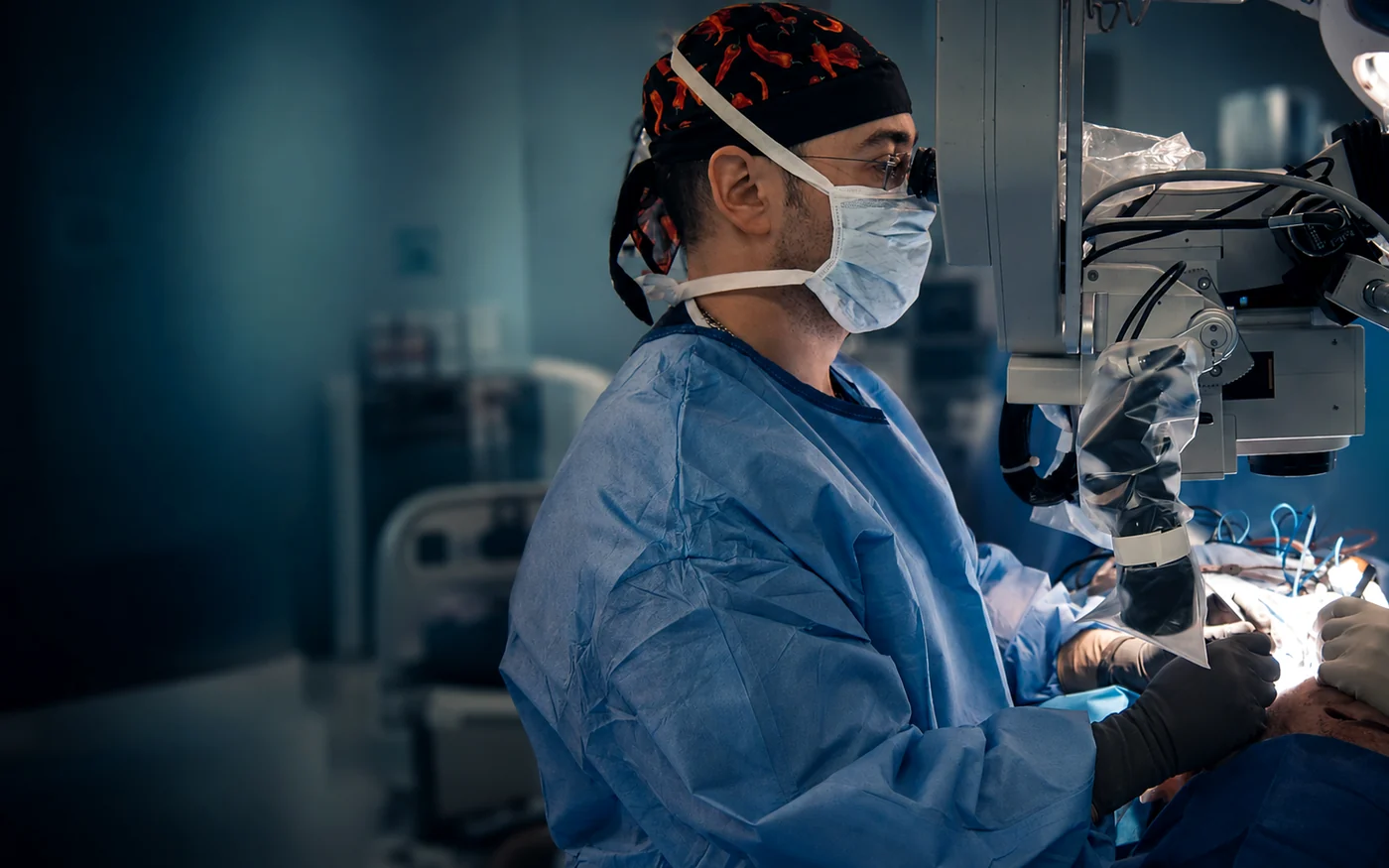
Experience in this field: Early diagnosis of lymphedema directly determines the success of treatment. Assoc. Prof. Dr. Acarturk is a microsurgeon who participates in the work of the European lymphatic microsurgery group and has presented at the World Congress of Lymphology; with 600+ microsurgical cases he translates staging into a treatment plan.
- Participation in the European lymphatic microsurgery group
- Presentation at the World Congress of Lymphology
- 600+ microsurgical cases at the University of Pittsburgh
Let us assess your symptoms
Tell us how long the swelling has been present, which limb is affected and whether it is one- or two-sided, and any surgery or radiotherapy you have had; if possible attach a photograph showing both limbs together.