Microsurgery Programme
Leg lymphedema: symptoms and treatment
If the swelling in your leg increases through the day and settles by morning, if your shoes feel tight and one leg is thicker than the other — this may not be a matter of weight. Leg lymphedema begins quietly, but it can be treated microsurgically at an early stage.
Written and medically reviewed by: Doç. Dr. Tahsin Oğuz Acartürk — Plastic, Reconstructive & Aesthetic Surgery; University of Pittsburgh. Last updated:
Symptoms of leg lymphedema
Leg lymphedema usually begins unnoticed. In the early period the swelling increases through the day and largely settles by morning. Because of this fluctuation patients attribute it to fatigue or salty food and do not consult a doctor for months.
Early findings
- Swelling that increases towards evening and lessens by morning
- Sock elastic leaving a deep mark on the leg
- Shoes feeling tight in the evening
- A sense of fullness and heaviness in the leg
- A widening difference in circumference between the two legs
Established findings
- Swelling that does not resolve when the leg is elevated
- Thickening and hardening of the skin
- Recurrent cellulitis (erysipelas) attacks — fever, redness, pain
- A squared appearance of the toes
- Leakage from the skin (lymphorrhoea) and wart-like changes
Stemmer's sign: Try to pinch and lift the skin over the second toe. If it is thick and cannot be lifted, the sign is positive and favours lymphedema. It is a simple but valuable examination finding — though it does not establish the diagnosis on its own.
Why does leg lymphedema occur?
The causes of lower limb lymphedema differ from those in the arm. In the arm the picture usually follows breast cancer treatment; in the leg the range of causes is wider.
- Gynaecological and urological cancer treatments: groin and pelvic lymph node dissection in uterine, ovarian and prostate cancer
- Radiotherapy: irradiation of the pelvis scars the lymphatic channels
- Recurrent cellulitis: each attack damages the lymphatic structure further — creating a vicious circle
- Melanoma surgery: after groin lymph node dissection
- Primary lymphedema: congenital underdevelopment of the lymphatic system; may appear in adolescence or adulthood
- Trauma and major orthopaedic surgery
The first step in leg lymphedema is to exclude an underlying obstruction. In one-sided, rapidly developing and painful swelling, deep vein thrombosis and a pelvic mass must be investigated. A diagnosis of lymphedema should not be made without this assessment.
Is leg swelling always lymphedema?
No. Several different conditions cause swelling in the leg and their treatments are entirely different. The most commonly confused pictures:
| Condition | Distinguishing feature |
|---|---|
| Lymphedema | Swelling extends to the top of the foot and toes; Stemmer positive; usually one-sided |
| Lipedema | Swelling stops at the ankle — cuff sign; feet spared; symmetrical; painful to touch |
| Venous insufficiency | Increases in the evening, settles quickly when the leg is raised; varicose veins and skin discolouration accompany it |
| Cardiac/renal/hepatic oedema | Symmetrical in both legs; pits on pressure; an underlying systemic illness is present |
| Deep vein thrombosis | Sudden onset, pain, increased warmth — requires urgent assessment |
Lymphedema and lipedema may also coexist; this is called lipo-lymphedema. For a detailed comparison see our lipedema surgery page.
Treatment of leg lymphedema
Treatment is planned according to stage. The basic principle is this: intervening while the lymphatic channels still work is far more effective than intervening after the tissue has hardened.
Conservative treatment
Complex decongestive physiotherapy — manual lymphatic drainage, bandaging, compression garments and exercise — is the foundation of treatment and continues after surgery. It does not, however, remove the obstruction itself.
LVA — lymphovenous anastomosis
Working lymphatic channels in the leg are connected to neighbouring veins under the microscope. The incisions are small and recovery is quick. It is the most effective option in the early stage, while the channels still contract.
Vascularised lymph node transfer
A group of your own lymph nodes is moved to the leg together with its feeding vessels. It is preferred in advanced stages and in patients whose groin region has been irradiated.
Reduction surgery
Where volume has increased through fat tissue and fibrosis, liposuction and excision reduce the volume of the leg. It does not restore lymphatic flow but markedly reduces the burden; it is usually planned alongside other methods.
In leg lymphedema, reducing recurrent cellulitis attacks is as important a goal as reducing volume. Each attack further damages the lymphatic structure; spacing the attacks out slows the progression of the disease.
Daily life with leg lymphedema
- Skin care is the most important protective measure. Dry skin cracks, and bacteria entering through the crack cause cellulitis. Daily moisturising should not be neglected.
- Pay attention to foot care: fungal infections start between the toes and are the commonest entry point for cellulitis
- Protect yourself from injury: avoid walking barefoot and cutting nails too short
- Movement helps: walking and calf muscle work support lymphatic flow
- On long flights compression stockings and frequent movement are advised
- Weight control directly reduces the lymphatic load
Fever, widespread redness of the leg and increased warmth herald cellulitis. This picture requires antibiotic treatment without delay; postponing it both worsens the attack and increases lymphatic damage.
Videos
Assoc. Prof. Acartürk Explains
Tap a cover to play the video right here. Videos are in Turkish.
 Doğumsal lenfödemin cerrahi tedavisi
 Doğumsal lenfödem — cerrahi tedavi sonucu
 Lenfödemde tedavi seçenekleri
Frequently asked questions
Is the swelling in my leg lymphedema or oedema?
Swelling that leaves a deep pit on pressure, settles quickly when the leg is raised and is symmetrical in both legs suggests systemic oedema. In lymphedema the swelling extends to the top of the foot and toes, Stemmer's sign is positive and it is usually one-sided. The definitive distinction is made by examination and imaging.
Does leg lymphedema go away?
A promise of complete cure would not be honest. However, in the early stage microsurgery can markedly reduce volume, cellulitis attacks become less frequent and dependence on compression garments decreases. As the stage advances, the aim becomes controlling the disease and preserving function.
Is treatment possible without surgery?
Complex decongestive physiotherapy and compression garments are the foundation of treatment and keep volume under control in many patients. They do not, however, resolve the obstruction itself. In patients at a suitable stage, surgery offers the possibility of addressing the cause.
Which operation is performed for leg lymphedema?
LVA comes to the fore in the early stage. In advanced stages vascularised lymph node transfer and reduction surgery are planned alone or together. The decision is made according to stage, imaging findings and the duration of the swelling.
Will I wear compression garments after surgery?
In the first period, yes. Over time the need decreases in many patients, but stopping altogether may not always be possible. This depends on the stage and the result of the operation.
Why do cellulitis attacks matter?
Each attack leaves permanent damage in the lymphatic channels and advances the stage of the disease. Preventing attacks — skin care, treating fungal infection, avoiding injury — is an inseparable part of treatment.
Doç. Dr. Tahsin Oğuz Acartürk
Plastic, Reconstructive & Aesthetic Surgery · Oral & Maxillofacial Surgery · University of Pittsburgh
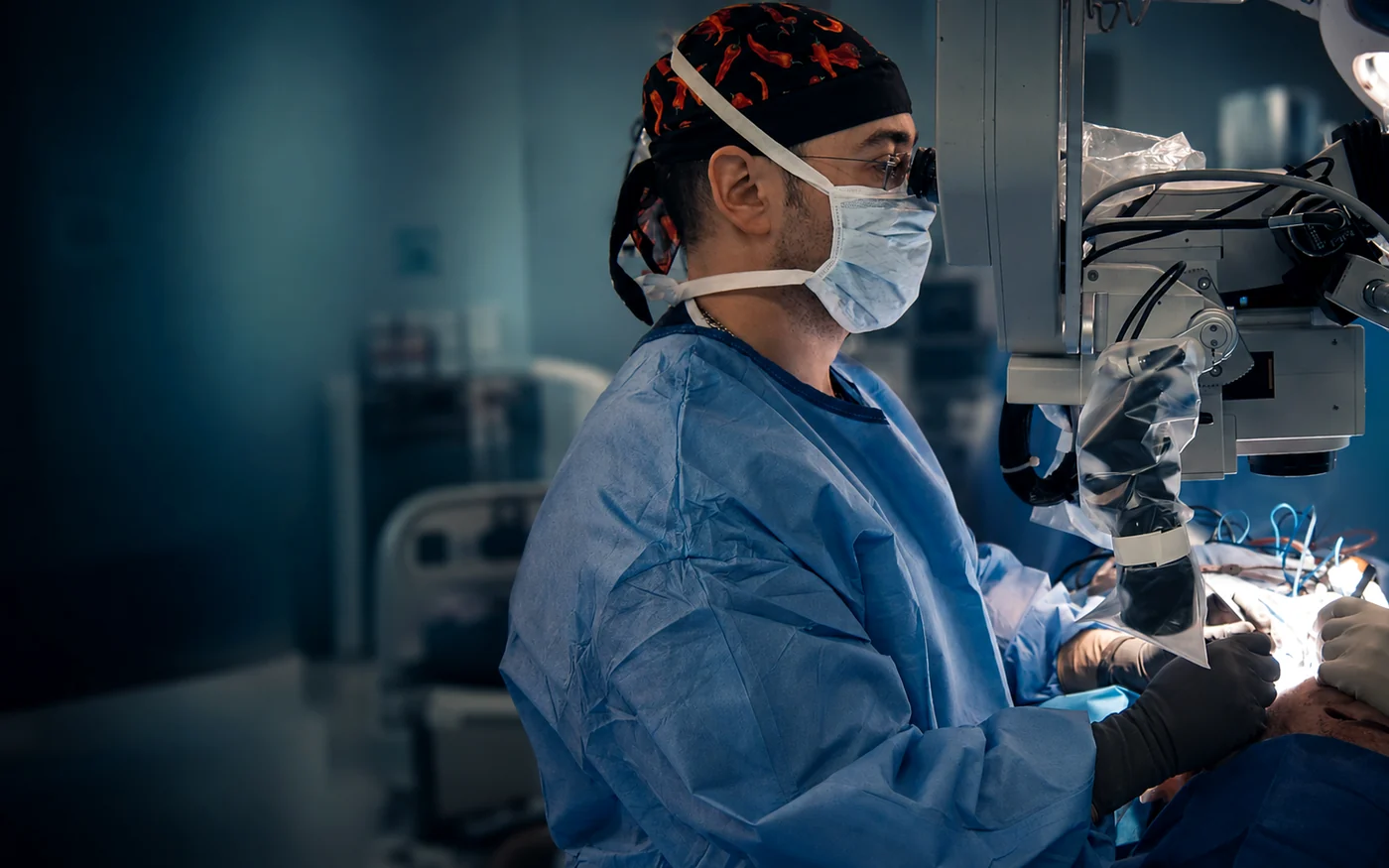
Experience in this field: Leg lymphedema is a harder field than arm lymphedema: gravity increases the lymphatic load, the distances are longer and the risk of infection is higher. With over 600 microsurgical cases from the University of Pittsburgh, Assoc. Prof. Dr. Acarturk works on lymphatic channels 0.3–0.8 mm in diameter and participates in the work of the European lymphatic microsurgery group.
- Former Director of Head and Neck Reconstruction, University of Pittsburgh — 600+ microsurgical cases
- Participation in the European lymphatic microsurgery group
- Presentation at the World Congress of Lymphology
Leg lymphedema assessment
Tell us how long the swelling has been present, whether it is one- or two-sided, any surgery or radiotherapy you have had and your history of cellulitis; if possible attach a photograph showing both legs together.