Microsurgery Programme
Why does lymphedema occur?
Lymphedema arises when lymphatic fluid accumulates in the tissue. But the real question is this: what caused that accumulation? Understanding the cause correctly directly determines both the treatment plan and the strategy for reducing risk.
Written and medically reviewed by: Doç. Dr. Tahsin Oğuz Acartürk — Plastic, Reconstructive & Aesthetic Surgery; University of Pittsburgh. Last updated:
How does lymphedema develop?
The lymphatic system is a fine network of channels that collects protein-rich fluid accumulating between the tissues and returns it to the circulation. Unlike the vascular system driven by the heart, it has no central pump; it works through muscle movement and contractions of the channel wall.
When this network is blocked or its transport capacity is exceeded, fluid accumulates in the tissue. At first this accumulation is fluid alone and is reversible. Over time fat deposition and fibrosis develop, the tissue hardens and the picture becomes permanent.
The critical point is this: lymphedema is not a static condition but a progressive process. Intervening early, while the channels still work, is far more effective than intervening after the tissue has hardened.
Causes of secondary lymphedema (commonest)
The great majority of cases are secondary — that is, the lymphatic system was initially normal and was damaged later.
Cancer treatments
- Lymph node dissection: removal of lymph nodes in breast, gynaecological and urological cancers and melanoma
- Radiotherapy: irradiation scars the lymphatic channels and lowers transport capacity
- The tumour itself: may block lymphatic pathways directly
Infections
- Recurrent cellulitis (erysipelas): each attack leaves permanent damage in the lymphatic channels and raises the risk of the next attack — a vicious circle
- Filariasis: the parasitic disease that is the commonest cause of lymphedema worldwide; it does not occur in Türkiye
Trauma and surgery
- Extensive soft tissue injuries and burns
- Major orthopaedic and vascular surgery
- Widespread scar tissue
Other
- Chronic venous insufficiency — increases the lymphatic load over time (phlebolymphedema)
- Obesity — a high body mass index strains lymphatic transport capacity
- Prolonged immobility
Primary lymphedema: congenital causes
Primary lymphedema is due to congenital underdevelopment of the lymphatic system. It is far rarer than secondary lymphedema and is named according to the age at which it appears:
| Type | Onset | Note |
|---|---|---|
| Congenital lymphedema | At birth or in the first 2 years | Milroy disease belongs to this group |
| Lymphedema praecox | Between adolescence and 35 | The commonest primary form; more frequent in women |
| Lymphedema tarda | After 35 | Rare; secondary causes must first be excluded |
In lymphedema beginning after the age of 35 with no obvious cause, an underlying mass or obstruction must be investigated before a diagnosis of primary lymphedema is made. This is a step that should not be skipped.
Factors that raise risk — and those you can change
Some risk factors cannot be changed (such as the extent of previous surgery); others are directly within your control.
| Factor | Modifiable? |
|---|---|
| Extent of lymph node dissection | No — though risk can be reduced with preventive surgery (LYMPHA) |
| History of radiotherapy | No |
| Genetic predisposition | No |
| Body mass index | Yes — weight control directly reduces the lymphatic load |
| Recurrent infection | Yes — through skin care and early antibiotics |
| Skin integrity | Yes — moisturising, avoiding injury, treating fungal infection |
| Immobility | Yes — regular exercise supports lymphatic flow |
Preventing infection is the most important of the modifiable factors. Each episode of cellulitis reduces lymphatic reserve a little further; preventing attacks is the most effective way to slow the progression of the disease.
Videos
Assoc. Prof. Acartürk Explains
Tap a cover to play the video right here. Videos are in Turkish.
 Lenfödem nedir? Genel bilgiler
 Doğumsal lenfödemin cerrahi tedavisi
Frequently asked questions
Is lymphedema hereditary?
Genetic predisposition plays a role in primary lymphedema and a family history may be present. However, the majority of cases are secondary — that is, they develop after cancer treatment, infection or trauma and are not hereditary.
Is lymphedema cancer?
No. Lymphedema is a circulatory disorder caused by accumulation of lymphatic fluid. Lymphoma is a cancer of the lymphatic system treated by haematology-oncology. Beyond the similarity of the names, they are unrelated.
Does lymphedema follow every lymph node operation?
No. The risk varies with the number of nodes removed and whether radiotherapy was added. It is low after sentinel lymph node biopsy, while it increases markedly when wide dissection and radiotherapy are combined.
Will losing weight correct lymphedema?
It will not correct it on its own but contributes markedly. A high body mass index strains lymphatic transport capacity; weight control both reduces existing swelling and improves treatment outcomes.
Why is cellulitis so important?
Each attack leaves permanent damage in the lymphatic channels and advances the stage of the disease. Having one attack also raises the risk of the next. Breaking this cycle is an inseparable part of treatment.
Does air travel cause lymphedema?
There is no strong evidence that a flight alone initiates lymphedema. However, wearing compression garments and moving frequently on long flights is a reasonable precaution for people at risk.
Doç. Dr. Tahsin Oğuz Acartürk
Plastic, Reconstructive & Aesthetic Surgery · Oral & Maxillofacial Surgery · University of Pittsburgh
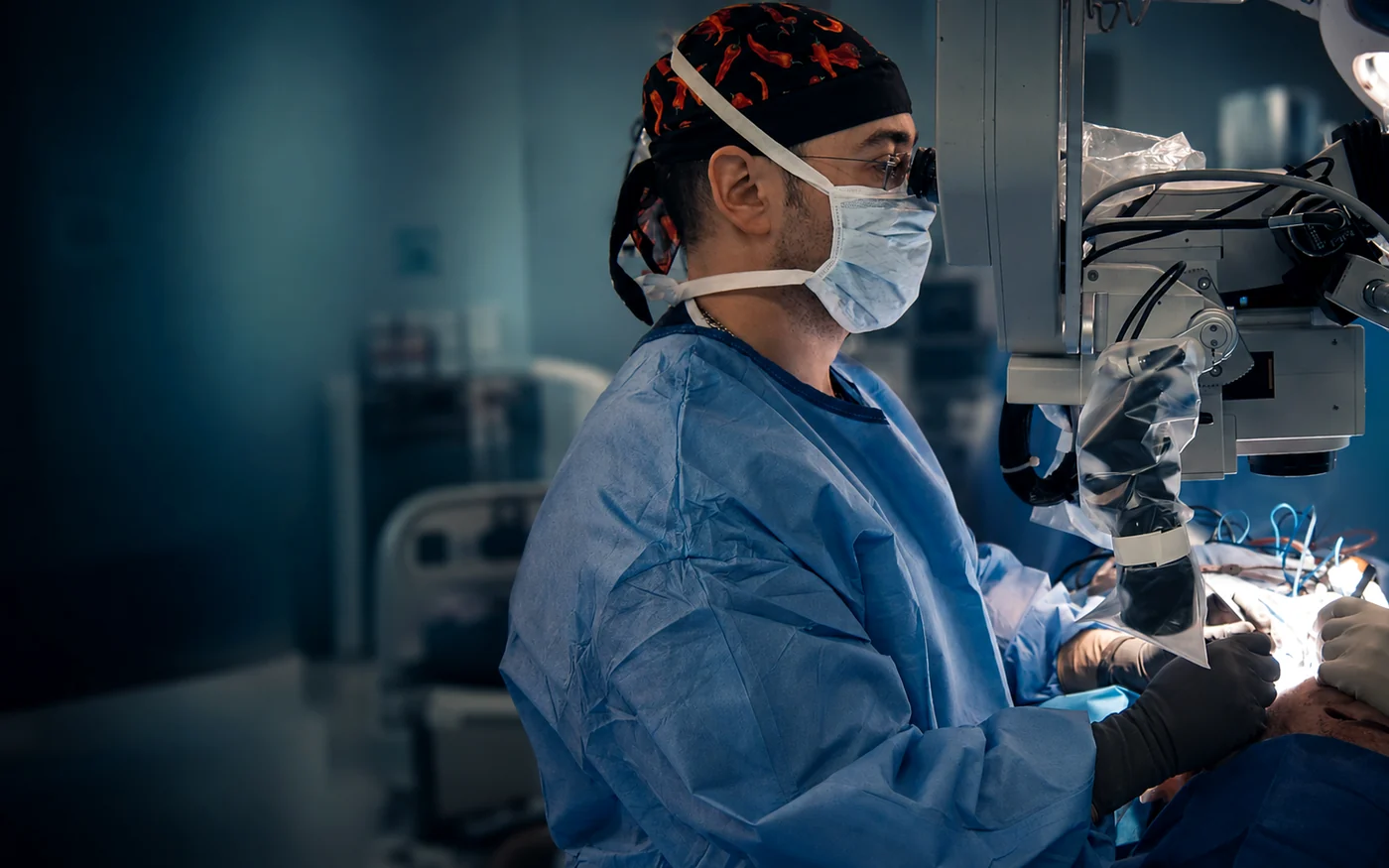
Experience in this field: Establishing the cause of lymphedema correctly both prevents unnecessary treatment and makes the right surgery possible. As a surgeon who performs both reconstruction after oncological surgery and lymphatic microsurgery, Assoc. Prof. Dr. Acarturk assesses these two fields together.
- Former Director of Head and Neck Reconstruction, University of Pittsburgh
- 600+ microsurgical operations · 1% tissue loss rate
- Participation in the European lymphatic microsurgery group
Let us assess the cause together
Tell us when the swelling began, any surgery and radiotherapy you have had, your history of infection and whether anyone in your family has a similar condition.