Microsurgery Programme
Arm lymphedema and treatment after breast cancer
For many patients, the swelling that begins in the arm after breast cancer treatment ends is the longest-lasting side effect of that treatment. But it is no longer an inevitable outcome: it can be addressed microsurgically at an early stage, and it can even be prevented during the original operation.
Written and medically reviewed by: Doç. Dr. Tahsin Oğuz Acartürk — Plastic, Reconstructive & Aesthetic Surgery; University of Pittsburgh. Last updated:
Symptoms of arm lymphedema
Arm lymphedema is often felt before any measurable swelling appears. Most patients first describe a sense of heaviness and tightness.
Early warning signs
- A feeling of fullness, heaviness or tightness in the arm
- A watch, ring or bracelet becoming tight
- A shirt sleeve feeling tight on one side only
- Tightness and shininess of the skin
- A sense of reduced arm movement
Established findings
- A measurable difference in arm circumference (usually 2 cm or more)
- Swelling that does not resolve when the arm is raised
- Thickening and hardening of the skin
- Recurrent cellulitis attacks
- Swelling of the back of the hand and fingers
Swelling in the first weeks after surgery is usually temporary oedema related to the operation and is not lymphedema. However, if swelling lasts longer than 3 months or begins later, it must be assessed.
Who is at higher risk?
Not every patient treated for breast cancer develops lymphedema. The risk varies with the extent of the treatment given.
| Factor | Effect on risk |
|---|---|
| Sentinel lymph node biopsy | Low risk — a limited number of nodes are removed |
| Axillary lymph node dissection | Marked increase in risk — the axillary lymphatic structure is widely affected |
| Radiotherapy to the axilla | Increases risk further; combined with dissection it carries the highest risk |
| Recurrent infection | Each attack reduces lymphatic reserve |
| High body mass index | Increases the lymphatic load |
| Trauma or surgery to the arm | Strains the existing reserve |
Lymphedema most often begins within the first 2 years after treatment ends, but it can also appear years later. For this reason regular monitoring of arm circumference is advised in patients at risk.
Can it be prevented?
The most important development in lymphedema surgery in recent years has been in prevention rather than treatment.
LYMPHA — preventive lymphovenous anastomosis
During axillary dissection, the divided lymphatic channels are connected to a neighbouring vein in the same session. An outlet for lymphatic flow is thus created from the outset. This approach is used with the aim of reducing the rate of lymphedema in high-risk patients.
Early detection
Taking arm circumference measurements before surgery and monitoring them regularly afterwards makes it possible to catch lymphedema before it becomes visible. A patient caught at stage 0 is the patient with the widest range of treatment options.
- A baseline measurement should be taken before surgery
- More frequent follow-up in the first 2 years, annually thereafter
- A sense of heaviness and tightness should be taken seriously — do not wait for measurements
- Skin care and infection prevention from day one
Treatment of arm lymphedema
Conservative treatment
Manual lymphatic drainage, bandaging, compression sleeves and exercise form the foundation of treatment and continue after surgery.
LVA
Working lymphatic channels in the arm are connected to veins under the microscope. It is performed through small incisions and the hospital stay is short. It is the most effective option in the early stage.
Vascularised lymph node transfer
Lymph nodes taken from a healthy region are moved to the axilla with their feeding vessels. Bringing living tissue into irradiated and scarred axillary tissue is a further benefit.
Scar release
Dense scar tissue in the axilla restricts both lymphatic flow and shoulder movement. Release, planned together with transfer, markedly improves the result.
Reduction surgery
In an arm enlarged by fat tissue and fibrosis, liposuction reduces volume. It is used with other methods in advanced stages.
In patients planning breast reconstruction, lymphedema surgery can be performed in the same session. This spares the patient a second operation. For details see our breast reconstruction page.
Videos
Assoc. Prof. Acartürk Explains
Tap a cover to play the video right here. Videos are in Turkish.
 Kollarda lenfödem
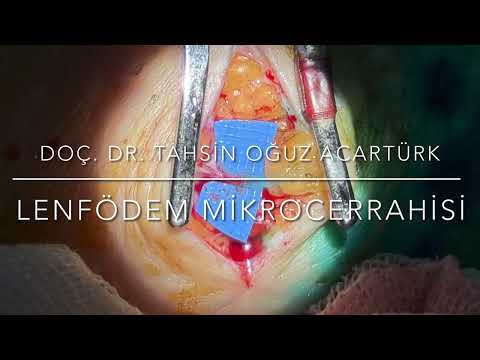 Lenf damarını toplardamara bağlama (LVA) ameliyatı
Frequently asked questions
Does everyone develop lymphedema after breast cancer surgery?
No. The risk varies with the treatment given. It is low after sentinel lymph node biopsy, while it increases markedly when axillary dissection and axillary radiotherapy are combined.
When does lymphedema begin?
Most often within the first 2 years after treatment ends. However, it can also appear years later, which is why follow-up should be long-term.
Is the swelling in my arm lymphedema?
A measurable difference in arm circumference compared with the other arm, a sense of heaviness and a ring or watch becoming tight suggest lymphedema. Swelling in the first weeks after surgery is usually temporary surgical oedema. The distinction is made by examination and measurement.
Will surgery correct it?
In the early stage, LVA can markedly reduce volume and dependence on a compression sleeve may lessen. In advanced stages, lymph node transfer and reduction surgery achieve control. A promise of complete cure would not be honest; the aim is to reduce volume, space out infections and restore function.
Can lymphedema be prevented?
In high-risk patients, the preventive LVA (LYMPHA) approach performed during axillary dissection is used with the aim of reducing the rate of lymphedema. A baseline measurement before surgery is also recommended for early detection.
Should I avoid using my arm?
No. The strict restrictions once advised are no longer valid. Gradually increased exercise and normal use are beneficial. What should be avoided is sudden excessive strain and injury.
Can blood pressure be measured and blood taken from that arm?
The traditional advice is to avoid the arm on the operated side. Although the level of evidence is debated, using the other arm where there is a choice is a reasonable precaution.
Doç. Dr. Tahsin Oğuz Acartürk
Plastic, Reconstructive & Aesthetic Surgery · Oral & Maxillofacial Surgery · University of Pittsburgh
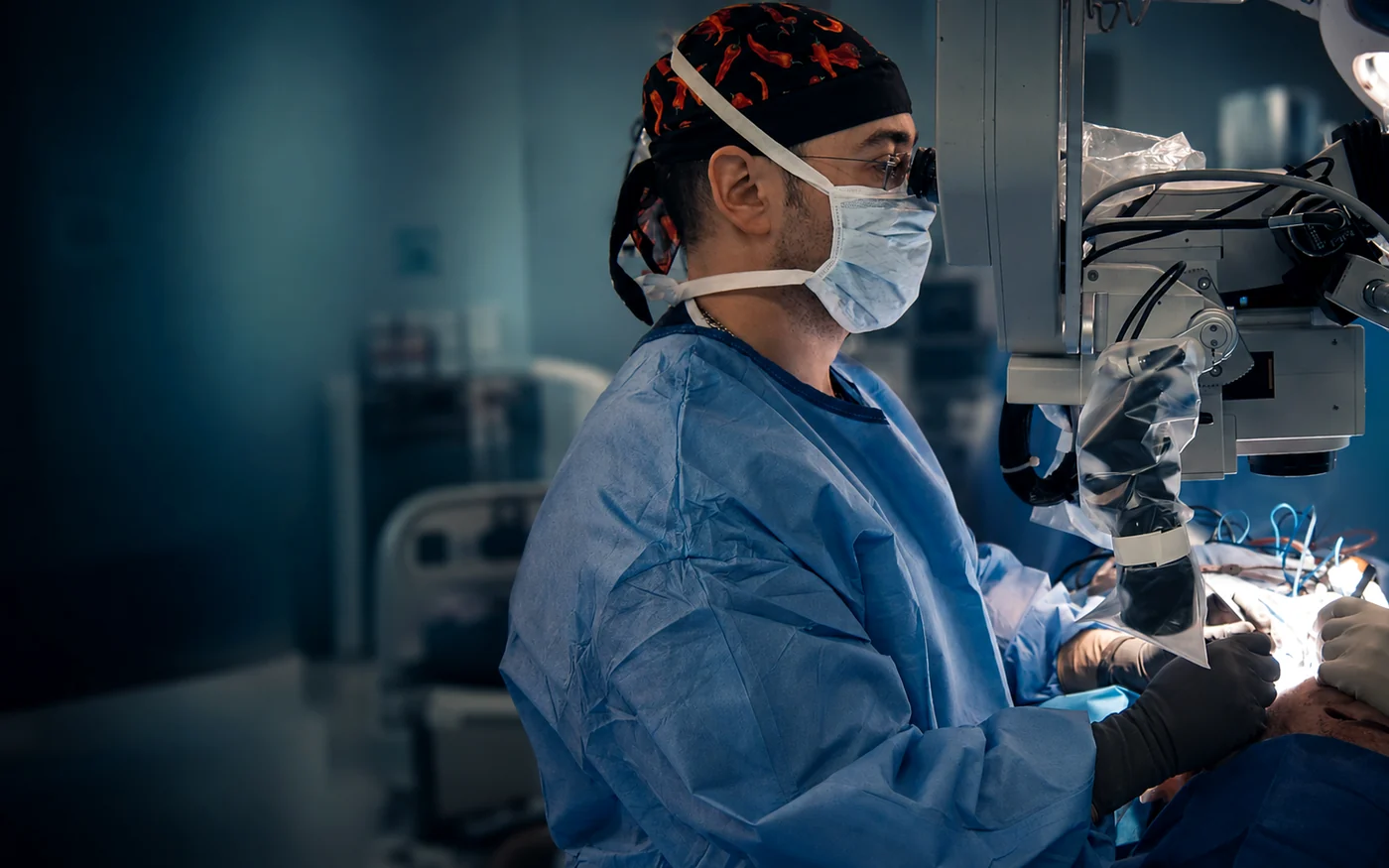
Experience in this field: Arm lymphedema surgery requires knowledge of both breast surgery and microsurgery. Assoc. Prof. Dr. Acarturk is a surgeon who performs both breast reconstruction and lymphatic microsurgery; with 600+ microsurgical cases and a 1% tissue loss rate, he brings these two fields into a single plan.
- 600+ microsurgical operations · 1% tissue loss rate
- Participation in the European lymphatic microsurgery group
- An integrated approach to breast reconstruction and lymphatic surgery
Arm lymphedema assessment
Tell us the extent of your breast cancer treatment (type of surgery, lymph node dissection, radiotherapy), when the swelling began and your arm circumference measurements; if possible attach a photograph showing both arms together.